SPOILER ALERT: No, I truly don't think so. But that shouldn't make you feel any better.
I'll get more to the president in a moment. But first, let's lay a few things out there.
First, there's a big difference between the political spectrum of ideologies and actual legitimate political parties. Let's have the sophistication to separate the two. Not all ultra-conservative (reactionary) ideologies are related to (or welcome in) the Republican Party, just as not all ultra left-wing ideologies are related to (or welcome in) the Democrat party. Sovereign Citizens, anarchists, eco-terrorists, Marxists, and other fringe ideologies do not have a foothold in either party. Just because someone is classified as "far left" or "far right" in ideology doesn't merit legitimate actors and parties being pasted and smeared with their acts or words (Anybody who does is lying to and manipulating you and should not be trusted.)
Extremists on either end of the political spectrum are fundamentalists, with binary values (I'm right, and everyone else is wrong), and prone to violent expression (whether physical or just in rhetoric). The "conventional" political spectrum, in which the Republican and Democrat parties operate are, in effect, the moderate middle (I know that's hard to believe). Because, no matter how much we disagree, we all believe that participation in the processes and institutions of our Constitutional Democracy is the way to effect change.
Second, you either operate within the political apparatus (parties, PACs, votes) or outside of it. There are people who have extreme ideologies who operate inside the apparatus, and those people tarnish anybody or any organization that suffers them. David Duke espouses ideologies (white supremacy) that are FAR outside any party platform, but is tolerated within Republican circles. That brings into legitimate question how tolerant the Republican Party is of such attitudes. Conversely, there are moderate groups with mainstream ideology and sentiments that are not directly involved in party politics. Non-profits, advocacy groups, churches: these are all examples of institutions that share certain ideologies but don't operate primarily in the political machine.
Recapping: You can be an extremist insider or a moderate outsider or any combination of them. It's important to understand where players are on the spectrum.
Third, let's be clear about the difference between violent political ideologies and incidents of opportunistic violence. A march by the non-violent and social justice #BlackLivesMatter movement that is co-opted by hooligans and thugs is not the equivalent of anarchists or white supremacists harming people and property as a vehicle for their ideology.
Thanks for your patience. Now to the matter at hand.
I do not believe the president is a racist. That's no vindication; I actually believe that his inability to empathize with other human beings makes racism basically irrelevant to understanding him. But he's the president, and he's accountable for the environment and people around him. And that's where we get to the root of the current situation. I said before that fringe groups are basically binary; so is the president (albeit for different reasons). And therein lie the inescapable parallels and attraction between the two.
The president has inarguably surrounded himself with racists and advocates of racist (and generally hostile toward all marginalized groups) policies. Bannon, Miller, Gorka, and Sessions have clear records and agendas. No sugar coating it: they're straight-up racists. There haven't been so many race-hostile people in the executive branch in decades, and that makes a clear statement. He can't possibly distance himself from racism philosophically when he can't distance himself physically.
And then there's the president's policy agenda, starting, most significantly with his absolute determination to erase everything about this nation's first black president. There is nothing that white nationalists want more than to eradicate Barack Obama's legacy from the annals of American history. It's easily thrown off as pettiness (and to him it probably is), but make no mistake, this is a bright neon sign to those fringe so-called "alt-right" elements. His "victims of Obamacare" charade is like a guestbook of aggrieved whiteness.
Simultaneously, in his "win or lose" brain, the president has bought in to key elements of the white nationalist "America under attack" mantra. That is, immigrants from Central and South America, and Middle Eastern Muslims. And he has laid down aggressive policy agendas to "fight back" against these false threats. Again, he's gone so far as to create "victims lists" and "undesirable" lists and published them. These policies are precisely the sort of "victories" that politically-minded fringes are looking for.
So, if he's not a racist (according to me, anyway) why won't he denounce, by name, the white supremacists who support him?
Those who have examined the president most closely describe him has having an insatiable need to be adored. That's why he loves the rallies so much. It's why he also constantly speaks in superlatives. That hole will never be filled, no matter how much money he makes, how many buildings bear his name, or how many votes he gets. It will never be enough. Many have posited that the president might be a "useful idiot" to Putin. That has yet to be proven. But, undoubtedly, he is being used as a vehicle for white nationalist/supremacist ideologues, in return for their adoration.
The president is binary, win/lose. And right now, he's losing. His popularity is historically, stunningly low. Who's sticking with him, though? The nationalists. He can't let go; that would be admitting defeat. He's trapped, both by his own psychosis and the team he put around him. But those nationalists are also operating freely and openly through the edges (but definitely inside) of the Republican political apparatus (see Iowa Congressman, Steve King, for example). They've been quietly, distastefully tolerated, because they bring votes and money. They have a seat at the table, even though nobody will admit they invited them. And that's the ugly elephant in the room for Republicans (no pun intended).
Bottom Line:
There is no place for hate or violence in America in 2017. The First Amendment gives you the right to spew this garbage, fine. I served to defend that right. But let's not kid ourselves. It doesn't belong here. And nobody who espouses hate or violence, for any reason in any form, should have a welcome seat in any mainstream political group.
Any reasonable, semi-informed person (let alone seasoned political operative) should be able to distinguish between extremist and mainstream ideology. Likewise everyone should be able to distinguish between politically-motivated violence and opportunistic rage. And if you can recognize it, you can tell the difference between righteous condemnation and ridiculous smear tactics.
It should be easy, therefore, to reject and condemn extremism and violence, no matter what your party affiliation or ideology. Nobody should think for a moment that rejecting white supremacists should have any political implication. But when the rats are in your midst, it gets a lot harder to deal with the traps.
Showing posts with label Fearless Liberal. Show all posts
Showing posts with label Fearless Liberal. Show all posts
Sunday, August 13, 2017

Sunday, August 6, 2017
ICYMI: Sliding Toward Authoritarianism
I try to be a measured observer. Even when I agree with people, philosophically, I tend to veer away from alarmist rhetoric. The sky, most of the time, isn't actually falling.
But I find myself genuinely and unshakably alarmed. Amidst the salacious and shiny personal scandals that seem to arise almost daily, a number of stories have continued to trickle out that, frankly, make my spider senses tingle. You probably lost them in all the noise.
There's an ongoing debate about whether our president is an Authoritarian. People often point to his tendency to praise foreign dictators. Is it his personality (or its deficiencies), his governing philosophy, or perhaps his core beliefs? Some combination of the three? In my judgement, it doesn't matter all that much what's driving it; it's the outcomes that matter. And those outcomes, increasingly and in accumulation, point to an alarming trend of, brick by brick, the construction of an authoritarian state.
As always, I leave it to you, the reader, to form your own assessment. Here's what I see.
The consolidation of power to a concentrated few (with leverage)
The failure of the Trump administration to appoint dozens of sub-cabinet leadership positions has been the subject of much reporting (so I won't link). Above that, they have dismissed career officials (dubbed the deep state) across the executive branch without replacing them. Those he has appointed, to a one, have deep conflicts of interest with the programs over which they preside. Many have significant allegations of corrupt action in their past, often in direct relation with those programs. This makes these select few especially beholden to their chief executive.
A concentrated effort to obscure
From removing website content, to gag orders on federal employees, to withholding visitor logs, to omitting contacts with foreign officials and their representatives, to blatantly, repeatedly, and intentionally lying to the public, this administration has clearly articulated its position that it is not answerable to the American people. Its obsession with so-called "leaks" belies its belief that secrecy FROM the constituents it represents is a top priority.
The establishment of a propaganda arm
When the former Communications Director, Boris Epshteyn, joined a largely-unknown Sinclair Media, it was a "shrug moment." Since then, however, Sinclair, it's broadcast affiliates, and it's digital arm, Circa, have steadily pumped out a pure, synchronized Trumpian narrative. It's basically the Sputnik/Pravda/RT for the Trump White House. All the while, they hammer away at the "fake news media," despite the fact that, over and over again, their reporting holds up under pressure. It is one thing to disagree on the interpretation of common facts. It is quite another to reject objective reality and substitute it with a political fiction.
An attempt to co-opt law enforcement
In a recent interview with the New York Times, the president admitted he believes the FBI director should report directly to him. Imagine the resources of a nationwide internal security force placed at the direct whim of a man who has a long-documented pattern of settling scores with his "enemies." The demand for the dramatic expansion of DHS agents under Customs and Border Patrol, as well as Immigrations and Customs Enforcement (ICE), already feels like the beginnings of a police state. It should be noted that, in authoritarian regimes across the world, internal security and secret police forces are the most feared, responsible for hunting down and jailing political opponents and dissidents.
The abridgment of due process
In the name of action toward illegal immigrants, this administration has set up so-called "rapid reaction forces" and "streamlined procedures" for ICE. These terms are shorthand for circumventing the Fourth Amendment to the Constitution. In this country, EVERYONE operates under the presumption of innocence and is entitled to all aspects of due process. These "streamlined" actions, however, instead presume guilt and strip people of their rights to representation and trial. The Muslim Ban on travel and immigration also presumed guilt of those already lawfully admitted to the country and deprived them of due process (as pointed out by the federal courts).
Defining an "undesirable class" (or several)
Through rhetoric and policy, this administration has plainly set its sights on a number of non-white groups. By intertwining undocumented immigrants (and sometimes not even bothering with the 'undocumented' distinction) with rapists, murderers, and gang members, the President is openly asking white Americans to look with suspicion at anyone with brown skin. By conflating the TINY number of jihadi mujaheddin with the remainder of a BILLION muslims across the world, the president has encouraged white Americans to fear anybody with a beard or head scarf. He WANTS you to be suspicious and afraid of these "undesirables" and to beg him to help save you from their unsavory appetites. Every dictator needs a clearly defined enemy. Add to that the series of decisions that strip equal status and protection for LGBTQ Americans.
Attacking the Democratic Process Itself
The president's claim of three to five million illegal and fraudulent votes post-election seemed like a laughable ego trip. But the establishment of a Presidential Commission has upped the ante significantly. Staffing it with conspiracy-promoting fringe types and granting it data-gathering power over the entire electorate is a breathtaking move. If you operate from the presumption that there are a large number of people on the roles who don't deserve to be and put the force of the DOJ behind it, you can reshape the electorate in any way you like and make Putin-like proclamations about the "real" level of support of opposition to any candidate or official. You can also proactively focus your money, agenda, and narrative against anyone who emerges that appears to threaten your regime.
And, finally, an attempt to circumvent the constitutional military order through the establishment of a private mercenary army.
In the turmoil of the daily circus that has become the news cycle, an incredible story emerged and was quickly lost in the froth. In July, Steve Bannon, Chief Strategist to the president, took a proposal to the Secretary of Defense suggesting that a private army made up of mercenaries from around the world should be established to carry out military action in Afghanistan. The fact that this proposal was rejected by Secretary Mattis is hardly comforting. It is unlikely in the extreme that Bannon would have made this step without consulting (and getting at least tacit approval from) the president. A private corporate army, unconstrained by the Uniform Code of Military Justice, the Law of Armed Conflict, and presumably outside the control of the military establishment, should chill the blood of every single American man and woman. The only other paramilitary forces that operate this way: ISIS and Al Qaeda.
It's possible, even likely, that you'll read this and go "Mike, you're just overreacting. Cut back on the caffeine." It's possible. I hope you're right. But what if you're not? Is it worth the cost to wait and see? Or is it time to put specific, focused, and unending pressure on Congress to see this for what it is and do everything in their power to curtail it?
But I find myself genuinely and unshakably alarmed. Amidst the salacious and shiny personal scandals that seem to arise almost daily, a number of stories have continued to trickle out that, frankly, make my spider senses tingle. You probably lost them in all the noise.
There's an ongoing debate about whether our president is an Authoritarian. People often point to his tendency to praise foreign dictators. Is it his personality (or its deficiencies), his governing philosophy, or perhaps his core beliefs? Some combination of the three? In my judgement, it doesn't matter all that much what's driving it; it's the outcomes that matter. And those outcomes, increasingly and in accumulation, point to an alarming trend of, brick by brick, the construction of an authoritarian state.
As always, I leave it to you, the reader, to form your own assessment. Here's what I see.
The consolidation of power to a concentrated few (with leverage)
The failure of the Trump administration to appoint dozens of sub-cabinet leadership positions has been the subject of much reporting (so I won't link). Above that, they have dismissed career officials (dubbed the deep state) across the executive branch without replacing them. Those he has appointed, to a one, have deep conflicts of interest with the programs over which they preside. Many have significant allegations of corrupt action in their past, often in direct relation with those programs. This makes these select few especially beholden to their chief executive.
A concentrated effort to obscure
From removing website content, to gag orders on federal employees, to withholding visitor logs, to omitting contacts with foreign officials and their representatives, to blatantly, repeatedly, and intentionally lying to the public, this administration has clearly articulated its position that it is not answerable to the American people. Its obsession with so-called "leaks" belies its belief that secrecy FROM the constituents it represents is a top priority.
The establishment of a propaganda arm
When the former Communications Director, Boris Epshteyn, joined a largely-unknown Sinclair Media, it was a "shrug moment." Since then, however, Sinclair, it's broadcast affiliates, and it's digital arm, Circa, have steadily pumped out a pure, synchronized Trumpian narrative. It's basically the Sputnik/Pravda/RT for the Trump White House. All the while, they hammer away at the "fake news media," despite the fact that, over and over again, their reporting holds up under pressure. It is one thing to disagree on the interpretation of common facts. It is quite another to reject objective reality and substitute it with a political fiction.
An attempt to co-opt law enforcement
In a recent interview with the New York Times, the president admitted he believes the FBI director should report directly to him. Imagine the resources of a nationwide internal security force placed at the direct whim of a man who has a long-documented pattern of settling scores with his "enemies." The demand for the dramatic expansion of DHS agents under Customs and Border Patrol, as well as Immigrations and Customs Enforcement (ICE), already feels like the beginnings of a police state. It should be noted that, in authoritarian regimes across the world, internal security and secret police forces are the most feared, responsible for hunting down and jailing political opponents and dissidents.
The abridgment of due process
In the name of action toward illegal immigrants, this administration has set up so-called "rapid reaction forces" and "streamlined procedures" for ICE. These terms are shorthand for circumventing the Fourth Amendment to the Constitution. In this country, EVERYONE operates under the presumption of innocence and is entitled to all aspects of due process. These "streamlined" actions, however, instead presume guilt and strip people of their rights to representation and trial. The Muslim Ban on travel and immigration also presumed guilt of those already lawfully admitted to the country and deprived them of due process (as pointed out by the federal courts).
Defining an "undesirable class" (or several)
Through rhetoric and policy, this administration has plainly set its sights on a number of non-white groups. By intertwining undocumented immigrants (and sometimes not even bothering with the 'undocumented' distinction) with rapists, murderers, and gang members, the President is openly asking white Americans to look with suspicion at anyone with brown skin. By conflating the TINY number of jihadi mujaheddin with the remainder of a BILLION muslims across the world, the president has encouraged white Americans to fear anybody with a beard or head scarf. He WANTS you to be suspicious and afraid of these "undesirables" and to beg him to help save you from their unsavory appetites. Every dictator needs a clearly defined enemy. Add to that the series of decisions that strip equal status and protection for LGBTQ Americans.
Attacking the Democratic Process Itself
The president's claim of three to five million illegal and fraudulent votes post-election seemed like a laughable ego trip. But the establishment of a Presidential Commission has upped the ante significantly. Staffing it with conspiracy-promoting fringe types and granting it data-gathering power over the entire electorate is a breathtaking move. If you operate from the presumption that there are a large number of people on the roles who don't deserve to be and put the force of the DOJ behind it, you can reshape the electorate in any way you like and make Putin-like proclamations about the "real" level of support of opposition to any candidate or official. You can also proactively focus your money, agenda, and narrative against anyone who emerges that appears to threaten your regime.
And, finally, an attempt to circumvent the constitutional military order through the establishment of a private mercenary army.
In the turmoil of the daily circus that has become the news cycle, an incredible story emerged and was quickly lost in the froth. In July, Steve Bannon, Chief Strategist to the president, took a proposal to the Secretary of Defense suggesting that a private army made up of mercenaries from around the world should be established to carry out military action in Afghanistan. The fact that this proposal was rejected by Secretary Mattis is hardly comforting. It is unlikely in the extreme that Bannon would have made this step without consulting (and getting at least tacit approval from) the president. A private corporate army, unconstrained by the Uniform Code of Military Justice, the Law of Armed Conflict, and presumably outside the control of the military establishment, should chill the blood of every single American man and woman. The only other paramilitary forces that operate this way: ISIS and Al Qaeda.
It's possible, even likely, that you'll read this and go "Mike, you're just overreacting. Cut back on the caffeine." It's possible. I hope you're right. But what if you're not? Is it worth the cost to wait and see? Or is it time to put specific, focused, and unending pressure on Congress to see this for what it is and do everything in their power to curtail it?
Tuesday, July 11, 2017
The Day We Found the Smoking Gun
Today, the President's son released a thread of emails between himself and a Russian associate which solicit a meeting between an emissary and three top members of the campaign. The email explicitly proposes an arrangement to provide information sourced by the Russian Government in order to assist the campaign. The email thread, a first-hand source, was sent between June 3rd and 8th.
A lot of people will look at this in isolation and work to explain it away. And some who are clever enough might even succeed. None of that actually matters one bit. What happened on the day, what was gathered in that meeting or as a result of it, none of it matters.
Because this is now the predicate through which we view everything that followed. Remember this phrase: "knowing that the Russian government was working to support the election of Donald Trump."
A lot of people will look at this in isolation and work to explain it away. And some who are clever enough might even succeed. None of that actually matters one bit. What happened on the day, what was gathered in that meeting or as a result of it, none of it matters.
Because this is now the predicate through which we view everything that followed. Remember this phrase: "knowing that the Russian government was working to support the election of Donald Trump."
- On June 14th, the DNC announced they had been hacked by the Russians
- On July 7th Carter Page takes a campaign-authorized trip to Moscow, knowing that the Russian government was working to support the election of Donald Trump.
- On July 18th, Jeff Sessions meets with Sergei Kislyak at the RNC knowing that the Russian government was working to support the election of Donald Trump, and the Trump campaign subsequently softened language on America's support of Ukraine against Russian aggression
- On July 23rd, the campaign watched WikiLeaks dump 22,000 hacked emails from the DNC, knowing that the Russian Government was working to support the election of Donald Trump.
- On July 24th, Paul Manafort said on television that the suggestion of connections between the campaign and Russia was "absurd," knowing that the Russian government was working to support the election of Donald Trump.
- Also on July 24th, Donald Trump Jr issued a similar denial on another program, saying "it's disgusting; it's phony... I can't think of bigger lies," knowing that the Russian government was working to support the election of Donald Trump.
- On July 27th, Donald Trump himself issued a similar denial on television.
- On September 7, Republican Operative Peter Smith wrote a document recruiting others to help obtain Clinton emails he believed were hacked by Russians, implying in conversations and emails that he was working with the Trump campaign.
- On September 8, Jeff Sessions meets again with Sergei Kislyak in his Senate offices, knowing that the Russian government was working to support the election of Donald Trump.
- On September 26 and October 19, Donald Trump stated during two presidential debates that he doubted Russia hacked the DNC, knowing that the Russian government was working to support the election of Donald Trump.
- Early December, Flynn and Kushner meet with Kislyak in Trump Tower, knowing the Russian government had worked to support the election victory of Donald Trump, and asked to set up a back-channel of communications, possibly directly from the Russian embassy in Washington DC.
- December, Kushner met with Sergei Gorkov, chairman of Russia's (sanctioned by the US) Vneshecombank (VEB), knowing the Russian government had worked to support the election victory of Donald Trump.
- Around January 11, Trump emissary and brother of Betsy DeVos met with Putin emissary secretly in the Seychelles, knowing the Russian government had worked to support the election victory of Donald Trump.
- On January 26, acting Attorney General Sally Yates warned White House counsel that Mike Flynn could be subject to blackmail by Russians, due to his undisclosed conversations. The White House failed to take action for 18 days afterward, knowing the Russian government had worked to support the election victory of Donald Trump.
- In February, Trump aides sought to unilaterally lift sanctions on Russia, knowing the Russian government had worked to support the election victory of Donald Trump.
- On May 9th, Trump fires James Comey, stating later it was "this Russia thing" and a "phony story," knowing the Russian government had worked to support the election victory of Donald Trump.
- On May 10th, Trump meets with Russian Foreign Minister, Sergei Lavrov, where he bragged that he fired "nut job" James Comey, and said he "faced great pressure because of Russia" while extemporaneously providing extremely sensitive HUMINT regarding ISIS in Syria, knowing the Russian government had worked to support the election victory of Donald Trump.
Saturday, June 10, 2017
Broken: What James Comey taught us about us
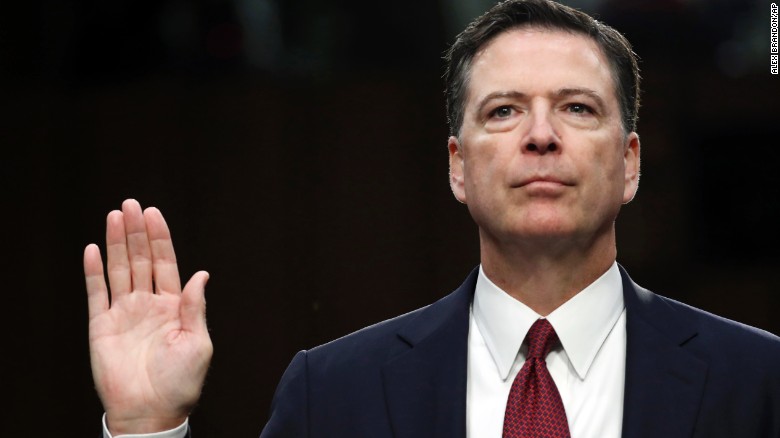
Here are the lessons I learned from this week. And I wish more people would talk about them, because I believe they say a lot more about us than anybody on camera.
We have completely given up on transparency in government.
I'm stunned by the constant characterization of Comey's actions as "leaks." The director of a "three letter" agency, a career public servant, released a complete and unabridged first-hand account, with full personal attribution of matters that he believed to be in the public interest. When did we become so cynical that an act of transparency is viewed with suspicion? We have the Freedom of Information Act, which FORCES government agencies to release information just like this. And, when a judge enforces it, we celebrate it as a coup. Even sympathetic coverage is using the "l-word".
What Comey did that was so stunning, that shook us to the point of suspicion, was to break ranks, to drop the "party line" and put disclosure of government activities ahead of, quite literally, his job. It's sad to see that such a simple act would come as a surprise.
We are living in a sort of "truth inversion"
In weather terms, an inversion is when a layer of air is trapped beneath another layer, preventing natural circulation and pollutants from getting out. In social terms, the truth has been trapped beneath a layer cynical and self-serving spin for so long that we no longer accept the truth, on its face, as good enough. Instead we expect proof, beyond an unreasonable doubt, that the speaker isn't lying.
If our court system worked that way, no witness would ever be considered credible. Yet, in today's politics, we can dismiss the word of a career law enforcement professional, placed in positions of the highest public trust again and again, simply on the basis that nobody can prove he isn't lying. There is no longer an assumption of truthfulness, from government, from media sources, or any other speaker. And that - if you think about it - puts our entire reality into subjective doubt.
We are almost pathologically protective of our reality bubble.
This is nothing new. Many studies and scholarly papers have been written about the tendency of people to reject new information, even if it is better or more likely to lead to success, in favor of known, flawed information with which we are comfortable. But we have turned this tendency, through social media and selective, tribal consumption of information into something fundamentally destructive. We have managed to build massive, mutually exclusive information bubbles that are self-feeding, self-reinforcing, and becoming increasingly removed from objective reality (there is actually such a thing).
People supportive of the president came away dismissing Comey's testimony (and his motives). People opposed to the president took everything he said as gospel truth. It can't be both, yet both narratives are carrying equal weight in the aftermath.
The most disappointing conversations I've had lately have been with fellow liberals who are literally angry about the inclusion of "conservative" hosts "taking over" the liberal-leaning channel MSNBC. We have been railing together against "fake news" for the better part of a year. But all of a sudden, a network whose editorial and production values have been considered trustworthy by these friends is now suspect, solely because a person is sitting in front of a camera who may have a differing philosophy of government. As if this sole fact makes a person less capable of informing the public. We've got to stop this.
Comey's testimony may or may not, in your view, be game-changing. But we need to pause and look critically at WHY we are coming to one conclusion or another. We deserve a transparent, honest, and objective government and public officials. But we will only get those things if we demand them. And, frankly, we need to learn again how to recognize it when we see it.
Friday, June 2, 2017
Is it okay to make fun of Donald Trump?
This week, comedian Kathy Griffin raised a huge uproar with a photo prank that fell more than flat on its face. And it got me to thinking: where's the line? What's the right approach in this climate?
Without a doubt, political speech is the most broadly protected form of expression in America. And satire has a unique way of making points that straight-laced commentary can struggle to achieve. So, yes, it's "okay" to make fun of this or any president.
But is it effective?
Truthfully, this is a larger question than satire or comedy or even snark. Since election day, the country has been ratcheted up like everyone has been crushing Monster drinks and caffeine pills. Town halls are raucous and borderline hostile. I'm as frustrated as anybody, and this is our right. But, at the end of the day, messages are meant to be received. And from where I'm sitting, nobody's listening. In fact, social media blocking of angry constituents is just the latest wave in a concerted effort to ignore those demanding answers.
Is it time to change tactics?
If we are simply looking for catharsis, then nothing feels better than a good, full-blown, fist-shaking vent. Doubly good if it's laced with some pithy sarcasm. But if we are looking to be taken seriously and to effect serious change, perhaps it's time to set a different tone.
Conservative media and cynical Republican officials are looking for ANY excuse to discount what we have to say. And they will take any incident, no matter how isolated, and paint us all with that same brush. As resisters, we have an obligation to represent each other and the movement in a positive light. Because only by holding the highest standards as individuals will we be able to lift up the rest of the movement and add our credibility to theirs.
We have serious issues to address. Social justice, battling corruption, protecting and supporting minorities and marginalized groups, a healthy and educated population for the future. These issues demand serious people, smart on the facts, making an unassailable case. These issues demand a resistance movement that cannot be ignored. As Thomas Jefferson said about the purpose of the Declaration of Independence, "to put the matter before the world, in terms so plain and firm, as to command their assent."
Keep resisting, my friends; command their assent!
Without a doubt, political speech is the most broadly protected form of expression in America. And satire has a unique way of making points that straight-laced commentary can struggle to achieve. So, yes, it's "okay" to make fun of this or any president.
But is it effective?
Truthfully, this is a larger question than satire or comedy or even snark. Since election day, the country has been ratcheted up like everyone has been crushing Monster drinks and caffeine pills. Town halls are raucous and borderline hostile. I'm as frustrated as anybody, and this is our right. But, at the end of the day, messages are meant to be received. And from where I'm sitting, nobody's listening. In fact, social media blocking of angry constituents is just the latest wave in a concerted effort to ignore those demanding answers.
Is it time to change tactics?
If we are simply looking for catharsis, then nothing feels better than a good, full-blown, fist-shaking vent. Doubly good if it's laced with some pithy sarcasm. But if we are looking to be taken seriously and to effect serious change, perhaps it's time to set a different tone.
Conservative media and cynical Republican officials are looking for ANY excuse to discount what we have to say. And they will take any incident, no matter how isolated, and paint us all with that same brush. As resisters, we have an obligation to represent each other and the movement in a positive light. Because only by holding the highest standards as individuals will we be able to lift up the rest of the movement and add our credibility to theirs.
We have serious issues to address. Social justice, battling corruption, protecting and supporting minorities and marginalized groups, a healthy and educated population for the future. These issues demand serious people, smart on the facts, making an unassailable case. These issues demand a resistance movement that cannot be ignored. As Thomas Jefferson said about the purpose of the Declaration of Independence, "to put the matter before the world, in terms so plain and firm, as to command their assent."
Keep resisting, my friends; command their assent!
Tuesday, May 16, 2017
The "Big Checkout" - How We Justify Disengagement
In modern American discourse, the word "Big" has become a pejorative. "Big Pharma" "Big Banks" "Big Business" "Big Media" and let's not forget "Big Government". America is the most affluent and powerful nation in human history; but is the down-side that everything is so bigly big that individuals feel hopelessly powerless? And, if so, what do we do about it?
These big institutions are the culminations of decades of success, built brick by brick and year after year, on the principle that growth is always good and more is always better. Bigness have given us more choice and more availability of practically anything we could want or need at any time, day or night. And that's a good thing. But...
"Bigness" creates a unique dynamic between the "big thing" and those under its influence, and it can be most easily observed in the world of cable TV providers. Nobody really likes them. Nobody's very satisfied with their costs, options, or service level. Yet most of us remain customers, because there really is no comparable option or alternative. Customers are trapped. So, even though the cable companies continue to have huge customer bases (and profits), the relationship is not a cheerful one. As a result, customers just hold their nose and disengage, always watching for some alternative.
Examples of this are literally everywhere around us. In retail, the airlines, in media, and - yes - in politics. And this ever-present passive-aggressive semi-surrender mindset of the average person in daily interactions, that are are needed but wholly unsatisfactory, is something that has polluted our attitudes toward political engagement in an extremely damaging way.
I view it as a cycle. It's hard to figure out exactly where it starts, because it feeds on itself.
These big institutions are the culminations of decades of success, built brick by brick and year after year, on the principle that growth is always good and more is always better. Bigness have given us more choice and more availability of practically anything we could want or need at any time, day or night. And that's a good thing. But...
"Bigness" creates a unique dynamic between the "big thing" and those under its influence, and it can be most easily observed in the world of cable TV providers. Nobody really likes them. Nobody's very satisfied with their costs, options, or service level. Yet most of us remain customers, because there really is no comparable option or alternative. Customers are trapped. So, even though the cable companies continue to have huge customer bases (and profits), the relationship is not a cheerful one. As a result, customers just hold their nose and disengage, always watching for some alternative.
Examples of this are literally everywhere around us. In retail, the airlines, in media, and - yes - in politics. And this ever-present passive-aggressive semi-surrender mindset of the average person in daily interactions, that are are needed but wholly unsatisfactory, is something that has polluted our attitudes toward political engagement in an extremely damaging way.
I view it as a cycle. It's hard to figure out exactly where it starts, because it feeds on itself.
- Politicians lie
- People are cynical about politicians
- People disregard what they are saying and doing
- Politicians get to do things without the voters paying attention
- Companies and interests get to influence politics without accountability
- Things get worse for individuals, better for the interests
- We don't have context to understand anymore, so we have to rely on the politicians to explain it
- Politicians need to get re-elected
- Repeat...
It's this cycle of dissatisfaction and codependency that repeats until we find ourselves completely detached from the process we actually own. And just like the cable company, we hold our noses and disengage, always watching for some alternative. We rant about it, but don't take any accountability. We forget that governing doesn't just happen in an election year. We've reduced our role in the democratic process to a single act on a single day. And when we DO engage, we are either low information voters or we're just too disgusted to vote at all.
There are only two ways to deal with an unspeakable mess: you can light it on fire and walk away (tempting), or put on a mask and grab a shovel (unpleasant and exhausting). I get why a lot of people, frustrated by the unspeakable mess of "big government," would rather choose the first option. In fact, I think that really describes what this last election was about for many. But, while it may have felt gratifying, it doesn't fix anything. We've got to grab our shovels. We've got to wade into the mess we helped create and clean it up. And we've got to stick with it to keep it clean. We can't merely leave it for once every four years.
If you want to take on the "Bigs" of this world, you've got to start small. Ask questions, talk to local officials, attend a city council meeting or a school board meeting, attend a party meeting in your local district. Find out what the reality is on the ground right around you. Then get your shovel. If you're already engaged, then it's your job to show people that small things and small steps make a difference. There are a lot more of us than there are of them.
Saturday, March 25, 2017
How do we take big money out of politics? You just did.
The defeat of the American Healthcare Act (aka TrumpCare, RyanCare, or TRyanCare) was a win for people who don't want to see tens of thousands of people left out of a basic need of all citizens. But it was more than that; it was the culmination of three months of concentrated grass roots engagement and activism by voters who, like me, just showed up. And that's the bigger lesson in all of this.
Campaign finance is a mess. Corporate and fringe political interests have held sway for far too long. But in 2017, people have proved that no amount of money can outweigh genuine engagement on the part of the electorate.
Our message was clear. Our efforts were focused. Our determination was palpable. It changed things. And it didn't cost a dime.
The conversation around politics has changed since election day. The ubiquitous "they" is no more. We are talking about policy in the first person. "How will this affect us?" "Do we need this?" "What can I do?" There is no greater power in the American model than an informed and energized voting public.
This is just the first step. A victory feels good. But now the veil has been pulled back. We see the bad actors, the gross incompetence, and the real interests that are driving our legislatures and national government into the ground. There's a lot more work to do. So, take a moment, look around, and savor the victory. Then roll up your sleeves. We've got more to do. And we can't be bought.
Campaign finance is a mess. Corporate and fringe political interests have held sway for far too long. But in 2017, people have proved that no amount of money can outweigh genuine engagement on the part of the electorate.
Our message was clear. Our efforts were focused. Our determination was palpable. It changed things. And it didn't cost a dime.
The conversation around politics has changed since election day. The ubiquitous "they" is no more. We are talking about policy in the first person. "How will this affect us?" "Do we need this?" "What can I do?" There is no greater power in the American model than an informed and energized voting public.
This is just the first step. A victory feels good. But now the veil has been pulled back. We see the bad actors, the gross incompetence, and the real interests that are driving our legislatures and national government into the ground. There's a lot more work to do. So, take a moment, look around, and savor the victory. Then roll up your sleeves. We've got more to do. And we can't be bought.
Thursday, March 23, 2017
Finding the Zebra Among the Stripes
The poor zebra is the perfect metaphor for where we are in America today. One side looks at it and says "it's black with white stripes" while the other says, "No! It's white with black stripes!" Both are arguably true and neither one can be objectively disproven. We are diametrically opposed! There's just no middle ground.
The part neither side seems to want to admit is that they are BOTH looking at the same zebra!
And that's how it goes. Whether it's an argument about civil rights, justice, school choice, healthcare, marriage equality, or women's reproductive rights, we are fixated on the stripes. Nobody wants to talk about the zebra.
Ladies and gentlemen, we are not a Red country with some Blue people. Nor are we a Blue country with some Red people. We are Americans, lumped together in this messy, chaotic grand experiment of liberty first envisioned almost a quarter millennium ago. But we have been sold a lie. Or, rather, two of them. The red and blue stripes are an illusion. They've been crafted by micro-targeting, big-data, big-money interests who only want their fringe version of America to ascend. DON"T. LET. THEM! It's time to recognize the zebra for what it is and stop arguing on behalf of people that just want to keep you in line.
Tuesday, March 14, 2017
Lessons from Moscow: Obliterating Terrorism
One of this president's top priorities and promises has been to "obliterate ISIS." Since 9/11, the shadow of terrorist attacks from extreme Islamist elements has certainly loomed large over our nation. But how do you kill an ideology? Is it even possible?
One could argue that the reason we have not been successful in "obliterating" terrorism is that we haven't been aggressive enough in prosecuting the war. Our foreign policy has certainly wavered under both of the previous administrations at different points.
Fortunately, we have other examples to learn from. One big one is Russia's efforts to stamp out their own Islamist extremist group in Chechnya.
Now, nobody could accuse Russia of being reluctant to prosecute this war. Over the course of the last 17 years (pre- 9/11), over 50,000 people have been killed on both sides, many of them civilians. Exactly how many and on which sides varies based on who you ask, but all estimates are well north of 50,000. That is a level of commitment that America hasn't come close to delivering in 45 years. The Russians are serious.
So what have they gotten for their efforts (besides killing 50,000 people)? Here's just a brief list of things:
One could argue that the reason we have not been successful in "obliterating" terrorism is that we haven't been aggressive enough in prosecuting the war. Our foreign policy has certainly wavered under both of the previous administrations at different points.
Fortunately, we have other examples to learn from. One big one is Russia's efforts to stamp out their own Islamist extremist group in Chechnya.
Now, nobody could accuse Russia of being reluctant to prosecute this war. Over the course of the last 17 years (pre- 9/11), over 50,000 people have been killed on both sides, many of them civilians. Exactly how many and on which sides varies based on who you ask, but all estimates are well north of 50,000. That is a level of commitment that America hasn't come close to delivering in 45 years. The Russians are serious.
So what have they gotten for their efforts (besides killing 50,000 people)? Here's just a brief list of things:
- Chechen fighters have become some of the most hardened mujahedin in the world
- Fighters from other nations, including Afghanistan and Syria, have come in to fight alongside their brothers, bringing networks and knowledge with them (and taking them home again).
- Chechen fighters have gone to Syria and Afghanistan during surge periods to shore up their ranks
- Grozny, the capital city of the Chechen Republic, is essentially a pile of rubble
- And, they're still fighting. In fact, indications are, as the Syrian conflict takes a turn, many fighters are returning to Chechnya to fight another day
Long story short, a full-fledged aggressive military campaign has not successfully eliminated the threat from these extremist elements. And that says a lot about how mujahedin operate around the world. They are the ultimate opportunists, seeking (and sometimes cultivating) conflict in areas where they can lend their lives to the cause. The conflicts don't normally start out with jihadis, but they wind up with them. They form, scatter, and re-form wherever strife exists. They come in like Robin Hood's band of Merry Men, distributing money and support, recruiting new fighters, and tipping the scales. All the while, they promote the most extreme version (or perversion) of basically 14th century Islam.
But these aren't the only examples. Consider the revolution in Northern Ireland or the battle with the communist FARC in Colombia. These conflicts, too, lasted for years upon years, and ultimately were unsuccessful, militarily speaking. You simply can't kill an idea.
Does that mean that there is no place for military force? No, it doesn't. Von Clausewitz said "war is diplomacy by other means." He was a smart guy. He realized that the ultimate end is always diplomatic, and that military force is applied for the purpose of making the alternative unacceptably costly. But it starts and ends with the tools of State.
An all-out war on ISIS will certainly kill a lot of those fighting today. But it will also kill tens of thousands of civilians in its path. And will certainly cement the idea for yet another generation that America is an enemy worth hating and worthy of jihad. And, like past ones, this new generation will come from all corners of the earth to join the fight. Fear-driven warfare is not the solution. It is the recipe for an entirely new round of conflict that will consume the best years of our millennial generation.
Sunday, March 5, 2017
Trump, The Russians, and the Null Hypothesis
In the last six months, a nebulous and nefarious Russia-Trump connection has been dogging at the heels of our current president. Conservatives are calling it conspiracy; liberals are calling it grounds for impeachment. Yet, for all of the circumstantial threads, there has yet to be a smoking gun.
One way or another, the future of our nation hinges on the truth of the matter. If, in fact, the administration is in cahoots with the minions of Vladimir Putin, then that's a threat to the integrity of our democracy. If not, we owe it to the stability of our constitutionally appointed and duly elected government to do their jobs without this cloud hanging over them. If not, everything they do will be viewed through the lens of possible collusion.
Let me be absolutely clear: I'm not happy about any of this. It gives me no joy, regardless of how this turns out. Either it has been the most reckless case of political innuendo ever, or our electorate have allowed an adversary to literally plant their cronies at the highest level of government. Either way, this is an extremely dire sign of the state of our democracy and institutions.
I've written a series of short posts on Facebook, titled Debunking 101. One of those posts was about the "Null Hypothesis". It's an analytical approach where, being stuck on a problem, you work to prove the opposite is true. If you can find proof of the Null Hypothesis, then you have to abandon your theory. So that's what I'm going to do here.
One way or another, the future of our nation hinges on the truth of the matter. If, in fact, the administration is in cahoots with the minions of Vladimir Putin, then that's a threat to the integrity of our democracy. If not, we owe it to the stability of our constitutionally appointed and duly elected government to do their jobs without this cloud hanging over them. If not, everything they do will be viewed through the lens of possible collusion.
Let me be absolutely clear: I'm not happy about any of this. It gives me no joy, regardless of how this turns out. Either it has been the most reckless case of political innuendo ever, or our electorate have allowed an adversary to literally plant their cronies at the highest level of government. Either way, this is an extremely dire sign of the state of our democracy and institutions.
I've written a series of short posts on Facebook, titled Debunking 101. One of those posts was about the "Null Hypothesis". It's an analytical approach where, being stuck on a problem, you work to prove the opposite is true. If you can find proof of the Null Hypothesis, then you have to abandon your theory. So that's what I'm going to do here.
Theory: Donald Trump is NOT in collusion with Vladimir Putin.
Likely Indicators:- Support for NATO - America's premier military counterpoint to Russia
- Opposition to Russian aggression in Ukraine and the annexation of Crimea, most likely through supporting ongoing sanctions that have been levied in response
- Actively supporting the Ukrainians in repelling Russian aggression
- Condemnation of a Russian intelligence and propaganda campaign to influence our election in 2016
- Statements clarifying the administration's position toward Russia
- No associate connections to Russia or Russians
- No financial connections to Russia or Russians
- No philosophical connections to Vladimir Putin, Russia, or Russians
- A sense of transparency and trustworthiness in general
If all, or even most of these are provably true, then we have to abandon the idea of the Putinized President.
On NATO, the president has been quite muddy. Since taking office, he has referred to NATO as "obsolete" but later expressed his support. On the campaign trail, he was consistently anti-NATO. His cabinet and VP Pence have worked to shore up the appearance of support for NATO, but it really remains to be seen which of the president's positions will emerge as the "real" policy.
As for the Ukraine, the president has yet to make a public statement. However, it is noteworthy that military action in the eastern regions of that country increased in the days following his first phone call with Vladimir Putin. And no criticism has been heard from the administration in response. The Russian version of the readout of that call mentions the "importance of restoring mutually beneficial trade and economic ties," but goes no further. We are told that Mike Flynn discussed sanctions during a phone call with the Russian ambassador, but we don't have any details about what was said.In a private, off-the-record meeting with a Ukrainian official, the president is said to have told her that he "would not abandon" the Ukraine. Still there are no more details and no public statements. We do have increasing evidence that elements of the Republican platform supporting the Ukraine were removed at the specific insistence of the president.
On the subject of the Russian hacking and propaganda campaign during the election, the president made a single statement in public. "He shouldn't have done it. I don't believe he will be doing it more now." That was in response to press questions on the subject in his first press conference after the election. I understand that this is a politically awkward position, as he tries to defend the legitimacy of his election while simultaneously acknowledging the fact that the election itself was the subject of influence from a foreign power.
On Russia in general, the president has been very equivocal. He'd like to do a deal, wants to have better relations, but hasn't gone out and done anything to either blatantly soften or strengthen America's stance toward Russia. Not much to go on here.
When it comes to Russian contacts and connections, there's something you need to understand. There is almost no distinction between private and government actors in the Russian system. Communism may be officially dead, but all successful institutions in Russia operate with the explicit blessing (and to the benefit) of Vladimir Putin. Private citizens often operate at the behest of the state, and the intelligence directorate is literally everywhere. So when you look at associations, it's very difficult to separate legitimate private actors from state-sponsored ones.
Still, you have a string of actors on this stage that raise questions. Manafort is deeply connected to pro-Kremlin actors. Flynn worked for state media, RT. Carter Page worked for and with GAZPROM. Rex Tillerson is a recipient of the Russian Medal of Friendship. And Wilbur Ross co-chairs a bank in Cyprus with at least one Russian Oligarch that is known to deal with vast sums of Russian money. None of these high-level associations help disprove or even dissuade any Russian associations.
Finally, we come to transparency. There isn't any. The president has either ignored or circumvented tradition and law that requires disclosure of finances and removal of conflicts of interests. It's not unusual for large and wealthy companies and operators to use shell companies to compartmentalize and shield assets from liability. But without tax returns and other disclosure, it's impossible to know where these rabbit holes lead. The president has had a demonstrable issue with the truth in ways small and large. In specific relation to Flynn and other revelations, there has been a pattern of strong denial until the point where the facts are revealed in the press. These patterns make it extremely difficult to discern what is true in his statements.
So, what are we left with? There are definitely some nods toward the Null Hypothesis, but nothing particularly solid. So, while we don't have a smoking gun in favor of the "collusion angle," we certainly don''t have enough to discard it either. As American citizens, we must know the truth. Party and politics aside. All of us should be pushing our elected representatives to investigate the entirety of this matter as quickly and thoroughly as possible. And we should all continue to gut check against the Null Hypothesis to make sure we aren't chasing shadows that just aren't there.
Thursday, March 2, 2017
Change, Fear, and the Myth of the Zero Sum
The conservative machine loves to call liberals "snowflakes" and "cry babies". For some reason the belief is that we are scared of our own shadows, likely to melt in the sun. But if you look at the politics of the left as compared to the right, it sure seems to me that the opposite is more likely the truth. Based on the policies they are championing: CONSERVATIVES. ARE. TERRIFIED. So-called "extreme vetting," a 2,000 mile wall, getting rid of all the "bad hombres," not to mention the inexplicable fervor to send our sons and daughters back into the furnace of war to obliterate an enemy that nobody else seems to want to deal with. Everywhere you turn, the conservative media outlets are pushing a "boogey man" narrative that keeps voters coming back.
But our country IS changing. Probably at a level not seen since the industrial revolution. Our economy is transforming into the beginnings of what it will be over the next 100 years. Old industries that were once the staple of our economy are decaying. New industries are still finding their way into the mainstream economy needed to support them. All the while, our demographics are evolving with them. Baby boomers are retiring (or should be if they were able to save enough). And as that generation slowly makes its way off the stage, a multi-racial, more diverse and socially liberal generation is on the ascent. In short, the way we work, live, interact, love, and thrive is quickly changing in fundamental ways, never to return.
And, for many, those less equipped to join the new economy, to relate in a browner, more accepting nation, that's scary as hell. It feels like the country is slipping away from them. Then, add on the conservative media's constant whipping up of fear about terrorism and immigrants. You're losing your job, your neighborhood is changing, AND they're all coming to kill you??!! No wonder people run to the strong protective embrace of the right.
The narrative is a sham. Seeing new trends and new faces emerging around you doesn't lessen your ability to thrive or pursue your own life and dreams in the same way you always have. It just means people that choose to do so differently are likely to be doing their own thing in neighborhoods like yours. And terrorism? Look, I grew up in Germany in the 70s and 80s. Lybians, the Red Army Faction, and others were setting off bombs in discotheques and on airliners. We didn't cringe in fear then; we faced them down with vigilance and determination. That was the proper response to terror.
The underlying belief making all of this change especially frightening is the idea that prosperity and fulfillment in America is a zero sum game. That, in order for some people to win, others have to lose. That's simply not the case. Sure, sometimes things play out that way. But most times, in America, there's enough prosperity to go around. We can celebrate Kwanzaa without taking away one single Christmas tree or piece of tinsel. We can recognize the right of all people to marry without lessening the value of your marriage or anyone else's. One person can make a pile of money and their next door neighbor can go out and make a different pile in a completely different way. We are not a "zero sum" nation.
The narrative of fear is not going away. It's too easy and too tempting to tap into. Watch the coverage coming out of conservative outlets and you'll see these themes play out over and over again. You can't reason with fear. You have to reject it. Face it head-on and reject the fear-baiting. And don't let anybody tell you that standing up for your beliefs (and the rights of others to live according to theirs) makes you weak.
But our country IS changing. Probably at a level not seen since the industrial revolution. Our economy is transforming into the beginnings of what it will be over the next 100 years. Old industries that were once the staple of our economy are decaying. New industries are still finding their way into the mainstream economy needed to support them. All the while, our demographics are evolving with them. Baby boomers are retiring (or should be if they were able to save enough). And as that generation slowly makes its way off the stage, a multi-racial, more diverse and socially liberal generation is on the ascent. In short, the way we work, live, interact, love, and thrive is quickly changing in fundamental ways, never to return.
And, for many, those less equipped to join the new economy, to relate in a browner, more accepting nation, that's scary as hell. It feels like the country is slipping away from them. Then, add on the conservative media's constant whipping up of fear about terrorism and immigrants. You're losing your job, your neighborhood is changing, AND they're all coming to kill you??!! No wonder people run to the strong protective embrace of the right.
The narrative is a sham. Seeing new trends and new faces emerging around you doesn't lessen your ability to thrive or pursue your own life and dreams in the same way you always have. It just means people that choose to do so differently are likely to be doing their own thing in neighborhoods like yours. And terrorism? Look, I grew up in Germany in the 70s and 80s. Lybians, the Red Army Faction, and others were setting off bombs in discotheques and on airliners. We didn't cringe in fear then; we faced them down with vigilance and determination. That was the proper response to terror.
The underlying belief making all of this change especially frightening is the idea that prosperity and fulfillment in America is a zero sum game. That, in order for some people to win, others have to lose. That's simply not the case. Sure, sometimes things play out that way. But most times, in America, there's enough prosperity to go around. We can celebrate Kwanzaa without taking away one single Christmas tree or piece of tinsel. We can recognize the right of all people to marry without lessening the value of your marriage or anyone else's. One person can make a pile of money and their next door neighbor can go out and make a different pile in a completely different way. We are not a "zero sum" nation.
The narrative of fear is not going away. It's too easy and too tempting to tap into. Watch the coverage coming out of conservative outlets and you'll see these themes play out over and over again. You can't reason with fear. You have to reject it. Face it head-on and reject the fear-baiting. And don't let anybody tell you that standing up for your beliefs (and the rights of others to live according to theirs) makes you weak.
Saturday, February 25, 2017
Is Obamacare the best bad idea ever?
When the Affordable Care Act was being debated and ultimately passed, I was not happy. I wasn't happy with the hyper-partisan political process and, more importantly, as an insurance guy, I wasn't happy with the proposed model. But, eight years later, I believe this has turned out to be the best bad idea ever.
The Bad
Insurance is all about balancing risk with cost. It's basically counting cards in blackjack. If you do it well, you can charge people collectively reasonable and layered rates based on the risk of occurrence of a claim. Insurers try and limit subsidization of higher risk groups by lower groups to provide more desirable rates to customers that are less likely to file a claim.
The certitude of a claim (i.e. a "pre-existing condition") completely breaks the model and stops it from functioning. The only way to counter-balance that is finding a group of equal weight that has a virtual certitude of never filing a claim and somehow splitting the difference. The ACA did that through the individual mandate. The math works out, but it's hardly equitable. And that's why costs have gone up.
And unlike something fairly straightforward, like Auto Insurance, health care issues aren't limited to a single clear point in time. Often they are chronic and progressive, creating an ever-mounting cost spiral.
In fact, it's my belief that an insurance-centric model as the primary means of access to health care is a lousy idea. Since insurance is predicated on the hope you never actually use it, the model is inherently at odds with the needs of the populace and modern medical practice, which places greater value on regular check-ups and screenings to prevent more serious conditions. Nevertheless, that's what we've got.
The Good
The mission of our federal government is to "promote the general welfare." I don't see anything more plainly fitting that scope than the health of our populace, our workforce, and our fighting force. The ripple effects of a debilitated population to productivity are staggering. Plus, expecting people to suffer when we have the means to alleviate it is simply inhuman. So, creating a system that provides access to care for 12 million people who needed it most but couldn't get it, is fundamental to our duty to our fellow citizens. We've raised the standard of fundamental support to people, and that's a victory we should all be proud of. Cortez burned his ships, and none of us can go back now. We are marooned together in this strange new land. Now, we have to figure out how to make a life here.
The Ugly
The one reason above all that I have come to support the ACA is this: eight years later and Republicans are still talking in bumper stickers. Ridiculous statements like "health savings accounts" and "let the free market decide" show that they clearly don't have a clue how to fix it. If the Democrats had not shoved the ACA down all of our throats, a courageous move that cost them dearly in congressional seats afterwards, we would still be dithering about slogans like "portability" and "tort reform" while people died. We can only hope we can find another batch of brave souls to tackle Social Security someday soon.
The Next Steps
Whether the ACA survives or not will be up to Republicans in Congress. We'll have to wait and see. The ACA has problems, no doubt, but they will be hard-pressed to deliver on promises without throwing a lot of people under the bus. I sincerely hope that they aren't that reckless.
What I hope happens next is this: Congress uses it's power to direct hospitals and doctors to reduce actual COSTS of care to the point where insurance is no longer the primary way to see your doctor. You can fiddle with the insurance models all you want, it's all still the same pile of money, just shuffled around differently. You've got to dictate that hospitals provide the basic services at accessible prices for routine and regular care. Then, maybe, the models can handle the rest.
The Bad
Insurance is all about balancing risk with cost. It's basically counting cards in blackjack. If you do it well, you can charge people collectively reasonable and layered rates based on the risk of occurrence of a claim. Insurers try and limit subsidization of higher risk groups by lower groups to provide more desirable rates to customers that are less likely to file a claim.
The certitude of a claim (i.e. a "pre-existing condition") completely breaks the model and stops it from functioning. The only way to counter-balance that is finding a group of equal weight that has a virtual certitude of never filing a claim and somehow splitting the difference. The ACA did that through the individual mandate. The math works out, but it's hardly equitable. And that's why costs have gone up.
And unlike something fairly straightforward, like Auto Insurance, health care issues aren't limited to a single clear point in time. Often they are chronic and progressive, creating an ever-mounting cost spiral.
In fact, it's my belief that an insurance-centric model as the primary means of access to health care is a lousy idea. Since insurance is predicated on the hope you never actually use it, the model is inherently at odds with the needs of the populace and modern medical practice, which places greater value on regular check-ups and screenings to prevent more serious conditions. Nevertheless, that's what we've got.
The Good
The mission of our federal government is to "promote the general welfare." I don't see anything more plainly fitting that scope than the health of our populace, our workforce, and our fighting force. The ripple effects of a debilitated population to productivity are staggering. Plus, expecting people to suffer when we have the means to alleviate it is simply inhuman. So, creating a system that provides access to care for 12 million people who needed it most but couldn't get it, is fundamental to our duty to our fellow citizens. We've raised the standard of fundamental support to people, and that's a victory we should all be proud of. Cortez burned his ships, and none of us can go back now. We are marooned together in this strange new land. Now, we have to figure out how to make a life here.
The Ugly
The one reason above all that I have come to support the ACA is this: eight years later and Republicans are still talking in bumper stickers. Ridiculous statements like "health savings accounts" and "let the free market decide" show that they clearly don't have a clue how to fix it. If the Democrats had not shoved the ACA down all of our throats, a courageous move that cost them dearly in congressional seats afterwards, we would still be dithering about slogans like "portability" and "tort reform" while people died. We can only hope we can find another batch of brave souls to tackle Social Security someday soon.
The Next Steps
Whether the ACA survives or not will be up to Republicans in Congress. We'll have to wait and see. The ACA has problems, no doubt, but they will be hard-pressed to deliver on promises without throwing a lot of people under the bus. I sincerely hope that they aren't that reckless.
What I hope happens next is this: Congress uses it's power to direct hospitals and doctors to reduce actual COSTS of care to the point where insurance is no longer the primary way to see your doctor. You can fiddle with the insurance models all you want, it's all still the same pile of money, just shuffled around differently. You've got to dictate that hospitals provide the basic services at accessible prices for routine and regular care. Then, maybe, the models can handle the rest.
Friday, February 24, 2017
Can Liberals Become the Voice of Reason?
People are fired up. Since the day after the inauguration, people have taken to the streets and social media, creating a wave of civil dissidence across the nation. Now that we are into Town Hall season, the evening news is filled with clips of chippy constituents pointing fingers and booing their elected officials. In Arizona, they are actually working right now to pass legislation to prosecute "rioters" under the RICO act, basically equating protest to organized crime.
While I get the frustration (and share it), are we in danger of this wave of energy backfiring in our faces? I don't pretend to have the answers. But I do know one thing: the decline of civil discourse didn't begin in 2016. In fact, we've all been watching it first-hand for several years now.
During George W. Bush's administration, there were protests about his electoral win and then sustained protests against the invasion of Iraq. When the Tea Party movement began in 2009, there were several allegations of racist and homophobic themes, remarks, and verbal assaults at a number of their events. Occupy Wall Street, in 2011 and 2012, though successfully peaceful, created enough concern that the Department of Homeland Security issued memos about the potential for violence. Black Lives Matter, beginning in 2014, have inspired protests across the nation in response to police violence against African Americans. Several of those have been co-opted and corrupted by elements that just wanted to rage. Whatever you think about any of these movements, their objectives, or their tactics, it's important to note the larger pattern: we've been in a recurring cycle of social unrest across the political spectrum for the last seventeen years. It has become the norm and it doesn't show any signs of slowing.
Closer to home, I've been actively engaged in utility policy matters for the last several years. Now you can't imagine anything less exciting than utility rate design, trust me. But in town halls across the city (I personally attended at least six of those), the same lack of civility dominated the events. People felt perfectly within their rights to shout, point, defame, and just generally spout verifiably untrue things because it made them feel good. It was universal. And it was embarrassing. Is this who we are now?
The political divide is sharper and nastier now, as our current President has taken the rhetoric to new lows. And, this time, we don't have a Dr King or Mahatma Gandhi to galvanize a morally-based civil disobedience movement. But we still have their lessons. The question is, are we up to it? Can we elevate ourselves, not to simply be the loyal opposition, but the dignified opposition? In today's climate, would that even work?
I'm an idealist. I never stop striving to put things in their best possible state. But I'm not an optimist. It has been my experience that ignorance and incompetence are far more common qualities than reason and excellence. Which will win, I wonder?
While I get the frustration (and share it), are we in danger of this wave of energy backfiring in our faces? I don't pretend to have the answers. But I do know one thing: the decline of civil discourse didn't begin in 2016. In fact, we've all been watching it first-hand for several years now.
During George W. Bush's administration, there were protests about his electoral win and then sustained protests against the invasion of Iraq. When the Tea Party movement began in 2009, there were several allegations of racist and homophobic themes, remarks, and verbal assaults at a number of their events. Occupy Wall Street, in 2011 and 2012, though successfully peaceful, created enough concern that the Department of Homeland Security issued memos about the potential for violence. Black Lives Matter, beginning in 2014, have inspired protests across the nation in response to police violence against African Americans. Several of those have been co-opted and corrupted by elements that just wanted to rage. Whatever you think about any of these movements, their objectives, or their tactics, it's important to note the larger pattern: we've been in a recurring cycle of social unrest across the political spectrum for the last seventeen years. It has become the norm and it doesn't show any signs of slowing.
Closer to home, I've been actively engaged in utility policy matters for the last several years. Now you can't imagine anything less exciting than utility rate design, trust me. But in town halls across the city (I personally attended at least six of those), the same lack of civility dominated the events. People felt perfectly within their rights to shout, point, defame, and just generally spout verifiably untrue things because it made them feel good. It was universal. And it was embarrassing. Is this who we are now?
The political divide is sharper and nastier now, as our current President has taken the rhetoric to new lows. And, this time, we don't have a Dr King or Mahatma Gandhi to galvanize a morally-based civil disobedience movement. But we still have their lessons. The question is, are we up to it? Can we elevate ourselves, not to simply be the loyal opposition, but the dignified opposition? In today's climate, would that even work?
I'm an idealist. I never stop striving to put things in their best possible state. But I'm not an optimist. It has been my experience that ignorance and incompetence are far more common qualities than reason and excellence. Which will win, I wonder?
Saturday, February 18, 2017
Liberalism and Morality
Conservative propaganda loves to paint liberals as "moral relativists" and hostile to Christian values. It's the pretext for a lot of the uglier, more hateful sentiments harbored by people on the deep hard-right. If you claim a superior morality, then everything you disagree with becomes "wrong" in the eyes of God. (Sharia much?)
So let me just say it now: the idea that my morality is inferior to yours - is - horrifically - offensive. In fact, it's hard for me to even continue writing with that sentiment in my head. But this is important. So, onward!
I'm not going to comment much about what the Liberal version of morality is. Not least of which, because I don't presume to speak for anybody beyond myself, let alone a vast wedge of political and social ideology. Instead, I'm going to examine morality itself and its role in government and society.
Point One: You can't legislate morality; only societal norms.
Human nature is a kooky thing. If you want to get people to do or think something, pretty much all you have to do is tell them they can't. And, if you try telling everyone that they must believe a certain set of things as "right" they'll work awfully hard at proving you wrong. That's why, more than anything, the whole concept of a "Christian-based nation" is critically flawed. You just can't tell human beings what to believe with the force of law.
Furthermore, there's this little issue of picking which version of religious morality you're going to use. Because, as much as some would refute it, religious doctrine is pretty malleable. According to the Hartford Institute of Religion Research, there are 217 Christian denominations in the US alone. Some are strict interpretationists, while others are more broadly open to ideas. Which one would you pick? Think about divorce. In the mid-20th century, divorce was considered essentially invalid across most mainstream faiths. People were not allowed to re-marry. Even the Princess Margaret of Great Britain was prevented from marrying a divorced man. Where is that hard and fast doctrine today? See, laws are a bit more rigid. Would you jail someone simply because they remarried outside the church? Would you punish people who dispute the age of the earth? Because that seems to be open to some debate, even among Christians.
Point Two: Everyone has got a little "relativism" in them
Take something as prosaic as traffic violations. It's the law, right? Yet, here in Phoenix, the common joke on the loop around the city is that "101" is the speed limit, not the name of the freeway. People take liberties where they feel comfortable and safe doing so. Good people, bad hombres. All of us. So why do we get super-sanctimonious on some things and not others? Remember, if you want the law based on "Christian principles" that means you plan to obey them fully and without exception.
The binary idea of "right" and "wrong" is a child-like approach to the world. Sure, there are some things we can all agree are pretty universally wrong: killing or hurting someone who isn't threatening you; taking things that don't belong to you. We can all get behind those. But, for most of life, a mature thinking person recognizes that there's a spectrum of "better" and "worse" and that context is everything. And anybody that refuses to acknowledge that is simply not being honest with themselves.
Point Three: A lot of this is about "the yucky sex stuff"
This country was founded by Puritans. And we've retained a lot of that puritanical streak in the American nature. It's important to acknowledge that we are straight-up prudish about sexuality as a society, and that much of the anti-liberal "moral-cesspool" stuff can be traced straight back to S-E-X. I don't know when we, as a society, are going to finally graduate the 8th grade, but if this is your hang-up and basis for rejecting me as a person, then we're just going to have to continue to disagree. How about this? I promise not to flaunt my sexuality in your living room if you promise not to flaunt yours in mine.
Point Four: Religion can be an easy cover for hatred
From slavery to segregation through to the AIDS epidemic and today, being able to declare an entire class of people as inferior or deviant gave cover to countless atrocities. Prominent mainstream figures, citing religious mandates have condemned people to death and damnation and excused those fearful, hateful practitioners that dealt out God's wrath on earth. So what is to say that somebody's moral imperative tomorrow won't deliver some similar atrocity? Nothing, actually. Nothing at all.
So, where does that leave us.
The Constitution is truly an amazing document. Virtually all laws are designed to limit. But the Constitution is a set of laws designed solely to preserve. Our nation is founded in Liberty. And the principles of liberty dictate that I have a fundamental right to believe and live whatever way I choose as long as I don't use those beliefs to directly prevent you from doing the same thing. You don't have to like my choices; I don't have to like yours. But as long as we can conduct our lives in the same society without one trampling the other, we're good. If we all spent a lot less time grading other people's lives than focusing on our own, we'd be a much happier place.
So let me just say it now: the idea that my morality is inferior to yours - is - horrifically - offensive. In fact, it's hard for me to even continue writing with that sentiment in my head. But this is important. So, onward!
I'm not going to comment much about what the Liberal version of morality is. Not least of which, because I don't presume to speak for anybody beyond myself, let alone a vast wedge of political and social ideology. Instead, I'm going to examine morality itself and its role in government and society.
Point One: You can't legislate morality; only societal norms.
Human nature is a kooky thing. If you want to get people to do or think something, pretty much all you have to do is tell them they can't. And, if you try telling everyone that they must believe a certain set of things as "right" they'll work awfully hard at proving you wrong. That's why, more than anything, the whole concept of a "Christian-based nation" is critically flawed. You just can't tell human beings what to believe with the force of law.
Furthermore, there's this little issue of picking which version of religious morality you're going to use. Because, as much as some would refute it, religious doctrine is pretty malleable. According to the Hartford Institute of Religion Research, there are 217 Christian denominations in the US alone. Some are strict interpretationists, while others are more broadly open to ideas. Which one would you pick? Think about divorce. In the mid-20th century, divorce was considered essentially invalid across most mainstream faiths. People were not allowed to re-marry. Even the Princess Margaret of Great Britain was prevented from marrying a divorced man. Where is that hard and fast doctrine today? See, laws are a bit more rigid. Would you jail someone simply because they remarried outside the church? Would you punish people who dispute the age of the earth? Because that seems to be open to some debate, even among Christians.
Point Two: Everyone has got a little "relativism" in them
Take something as prosaic as traffic violations. It's the law, right? Yet, here in Phoenix, the common joke on the loop around the city is that "101" is the speed limit, not the name of the freeway. People take liberties where they feel comfortable and safe doing so. Good people, bad hombres. All of us. So why do we get super-sanctimonious on some things and not others? Remember, if you want the law based on "Christian principles" that means you plan to obey them fully and without exception.
The binary idea of "right" and "wrong" is a child-like approach to the world. Sure, there are some things we can all agree are pretty universally wrong: killing or hurting someone who isn't threatening you; taking things that don't belong to you. We can all get behind those. But, for most of life, a mature thinking person recognizes that there's a spectrum of "better" and "worse" and that context is everything. And anybody that refuses to acknowledge that is simply not being honest with themselves.
Point Three: A lot of this is about "the yucky sex stuff"
This country was founded by Puritans. And we've retained a lot of that puritanical streak in the American nature. It's important to acknowledge that we are straight-up prudish about sexuality as a society, and that much of the anti-liberal "moral-cesspool" stuff can be traced straight back to S-E-X. I don't know when we, as a society, are going to finally graduate the 8th grade, but if this is your hang-up and basis for rejecting me as a person, then we're just going to have to continue to disagree. How about this? I promise not to flaunt my sexuality in your living room if you promise not to flaunt yours in mine.
Point Four: Religion can be an easy cover for hatred
From slavery to segregation through to the AIDS epidemic and today, being able to declare an entire class of people as inferior or deviant gave cover to countless atrocities. Prominent mainstream figures, citing religious mandates have condemned people to death and damnation and excused those fearful, hateful practitioners that dealt out God's wrath on earth. So what is to say that somebody's moral imperative tomorrow won't deliver some similar atrocity? Nothing, actually. Nothing at all.
So, where does that leave us.
The Constitution is truly an amazing document. Virtually all laws are designed to limit. But the Constitution is a set of laws designed solely to preserve. Our nation is founded in Liberty. And the principles of liberty dictate that I have a fundamental right to believe and live whatever way I choose as long as I don't use those beliefs to directly prevent you from doing the same thing. You don't have to like my choices; I don't have to like yours. But as long as we can conduct our lives in the same society without one trampling the other, we're good. If we all spent a lot less time grading other people's lives than focusing on our own, we'd be a much happier place.
Thursday, February 16, 2017
Why don't liberals care about jobs
Soon after the election, after the initial shock wore off, the inevitable question came from everyone's lips. "What the hell just happened?" Even supporters of our 45th President were surprised by his victory. And, pretty quickly, the conventional wisdom gelled around one theme: Jobs. Or, as Bill Clinton once put it, "It's the economy, stupid!"
Then the Monday morning quarterbacking started. "Why didn't the Democrats talk more about jobs? If only they had, we woulda won this thing." Fair question. So why didn't liberals talk about jobs? Why isn't it a prominent theme across our platform? Simple: JOBS. AREN'T. A. PROBLEM. At least, not at a national level. At unemployment less than 5%, basically everyone that wants a job has one.
Talk about the unemployment rate with a conservative for just 30 seconds, and you'll hear that old gem, "Unemployment doesn't count all the people that have stopped looking for work." It's a handy argument. It neatly undercuts the number without offering any clarity, whatsoever. So what's a liberal to do?
Instead of looking at unemployment rates, why don't we talk more about how many people are actually working? It certainly takes away the "stopped looking" argument. Is it because it's too hard to figure out? Nope. The Bureau of Labor Statistics is, true to its name, LOADED with labor statistics. Free for the accessing (unless our President decides that should be shut off too). Just take a look at this graph below, pulled today.
So there it is, in black and white (and red). This graph shows how many people had a job (other than on a farm) every month over the last 17 years. What can we learn here?
What we are left with is the cognitive dissonance created by the conservative media machine with inane and unsupported counterpoints like "well that doesn't count all the people who stopped looking for work." It's been repeated so often, along with other themes, that, in spite of the fact that the people hearing the message actually HAVE jobs (along with their friends, relatives, and neighbors), they still believe to their core that unemployment is still a problem.
Now there are states and certainly counties across America that are suffering. But those are state issues and fall at the feet of the governors in control of those states. Everybody has heard their own governor talk about how they're going to create conditions for business to come into their state. And it's at this local level that we, as liberals, need to be plugged in. We need to bring our own ideas and messages for prosperity to our cities, counties, and states. Because that's where the solution will come. Which, by the way, is where the Democrats ARE ACTUALLY FAILING. Get local. That's where things actually get fixed.
Then the Monday morning quarterbacking started. "Why didn't the Democrats talk more about jobs? If only they had, we woulda won this thing." Fair question. So why didn't liberals talk about jobs? Why isn't it a prominent theme across our platform? Simple: JOBS. AREN'T. A. PROBLEM. At least, not at a national level. At unemployment less than 5%, basically everyone that wants a job has one.
Talk about the unemployment rate with a conservative for just 30 seconds, and you'll hear that old gem, "Unemployment doesn't count all the people that have stopped looking for work." It's a handy argument. It neatly undercuts the number without offering any clarity, whatsoever. So what's a liberal to do?
Instead of looking at unemployment rates, why don't we talk more about how many people are actually working? It certainly takes away the "stopped looking" argument. Is it because it's too hard to figure out? Nope. The Bureau of Labor Statistics is, true to its name, LOADED with labor statistics. Free for the accessing (unless our President decides that should be shut off too). Just take a look at this graph below, pulled today.
 |
| Bureau of Labor Statistics, total non-farm employment, 2000-2016 |
- After 9/11, we had a recession. We didn't pull out of that until 2004, George W. Bush's 2nd term.
- Things looked pretty good for Bush 43 in his 2nd term.
- The housing crash hit at the end of Bush 43 and Barack Obama rolls into office during the most dramatic drop in the economy since the Depression.
- Even so, the total employment numbers didn't dip below the levels of the post-9/11 recession.
- Then, in 2010, and through the next six years, there was a steady and strong increase in the number of people working, at the same rate of recovery (look at the slopes of the lines) that Bush 43 enjoyed post 9/11.
What we are left with is the cognitive dissonance created by the conservative media machine with inane and unsupported counterpoints like "well that doesn't count all the people who stopped looking for work." It's been repeated so often, along with other themes, that, in spite of the fact that the people hearing the message actually HAVE jobs (along with their friends, relatives, and neighbors), they still believe to their core that unemployment is still a problem.
Now there are states and certainly counties across America that are suffering. But those are state issues and fall at the feet of the governors in control of those states. Everybody has heard their own governor talk about how they're going to create conditions for business to come into their state. And it's at this local level that we, as liberals, need to be plugged in. We need to bring our own ideas and messages for prosperity to our cities, counties, and states. Because that's where the solution will come. Which, by the way, is where the Democrats ARE ACTUALLY FAILING. Get local. That's where things actually get fixed.
Sunday, February 5, 2017
And five things we probably can't discuss
Updated 8 Feb: This article rapidly became the most read and most argued piece I've written to date. It says something to me that nobody wanted to join a discussion when I offered an opening on five core wedge issues between Liberals and Conservatives, but as soon as I said something was off limits, people went through the roof.
I'm leaving the original article untouched below, but I want to add something for future readers. And it's this: saying a topic is off limits is not the same as saying the matter is settled or that I don't see anything worth hearing from anyone on the other side. Instead, making it off limits is to forthrightly and respectfully say to you (in advance) we are only going to get into a fight, not a discussion or a debate, but a fight, if you try and force me into one of these lanes. I'd rather not do that. I'd rather you know where my red lines are and, instead, focus on the many things we have in common to try and start building small bridges where we can. That said, read on.
In my last post, I suggested that there are a lot of things that liberals and conservatives can actually talk about IF you agree to drop the rhetoric for a little while. And, if we're going to actually turn the corner on this ever-widening impasse, then we're going to have to take those first tentative steps.
But some things are deal-breakers; ideas whose time has passed and simply do not belong in 21st century America. The conservative machine likes to characterize liberals as mushy-gushy, bleeding hearts who hug trees and cry a lot. But liberals should not be afraid to draw a hard bright line when their core principles are attacked.
Equal Dignity
There is no room for diminishing any person or group of people, simply because you disagree with them, believe differently than they do, or because you believe you simply have the superior position, morally or personally. We do not have second-class citizens. I look forward to a day when the term "marginalized group" is something we talk about in historical context. If you plan on going down this road, I will stop you. I will correct you. I will invite you to never speak that way in my presence again. This includes any so-called 'dog whistles'.
Equal Justice
There's a saying: lies, damn lies, and statistics. Spin machines love to find ways to twist statistics into narratives that imply inequalities in justice are either over-blown or self-imposed. The bare facts on this matter are plain and irrefutable. Marginalized groups in this country do not get equal protection or equal treatment under the law. If you're not willing to acknowledge that injustice and see it as a central issue of the American identity, then we aren't going to be able to talk. Yes - #BlackLivesMatter
Equal Opportunity
"Opportunity" is a really broad term. When I say "opportunity," I mean "opportunity to flourish." To me, this goes from childhood (education) through transition (college and entering the workforce) through adulthood (work, income, participation in all aspects of society). Now, I'm not talking specific policy here (I don't think college should be free for everyone, for example). I'm just talking about the core belief. If you won't acknowledge that, currently, people are still systematically and individually blocked from opportunities afforded to others, then I can't have a conversation with you.
Repealing Roe
We are never going to agree on abortion. And that's okay. It's a visceral issue. Protecting children is one of our deepest instinctual traits. But here's the deal. Not supporting abortion personally is not the same as declaring your values as holding dominion over a woman's body and choices. A woman who is forced to have a child in our society is forced, too, to bear the full burdens of supporting and raising that child in almost every case. Outlawing abortion is basically a mandatory minimum 19-year sentence for the woman with ZERO accountability for men or for society. So, no, the middle-aged affluent white men in think tanks and government have no business passing laws over one segment of society that will never impact them directly, and I'm not going to debate that with anyone.
"Fake News"
I hate this term. It lends too much credibility to lying. But that's what we call it these days. I have very active and respectful debates with long-time friends on the right. But bring the facts. Facts lend clarity. Facts can be examined on equal terms by all parties. Propaganda cannot. And, if you come at me with unverified nonsense from "RedMeatDaily.ru" then I will shut you down. That's not a debate; that's a flame-throwing match.
I'm leaving the original article untouched below, but I want to add something for future readers. And it's this: saying a topic is off limits is not the same as saying the matter is settled or that I don't see anything worth hearing from anyone on the other side. Instead, making it off limits is to forthrightly and respectfully say to you (in advance) we are only going to get into a fight, not a discussion or a debate, but a fight, if you try and force me into one of these lanes. I'd rather not do that. I'd rather you know where my red lines are and, instead, focus on the many things we have in common to try and start building small bridges where we can. That said, read on.
In my last post, I suggested that there are a lot of things that liberals and conservatives can actually talk about IF you agree to drop the rhetoric for a little while. And, if we're going to actually turn the corner on this ever-widening impasse, then we're going to have to take those first tentative steps.
But some things are deal-breakers; ideas whose time has passed and simply do not belong in 21st century America. The conservative machine likes to characterize liberals as mushy-gushy, bleeding hearts who hug trees and cry a lot. But liberals should not be afraid to draw a hard bright line when their core principles are attacked.
Equal Dignity
There is no room for diminishing any person or group of people, simply because you disagree with them, believe differently than they do, or because you believe you simply have the superior position, morally or personally. We do not have second-class citizens. I look forward to a day when the term "marginalized group" is something we talk about in historical context. If you plan on going down this road, I will stop you. I will correct you. I will invite you to never speak that way in my presence again. This includes any so-called 'dog whistles'.
Equal Justice
There's a saying: lies, damn lies, and statistics. Spin machines love to find ways to twist statistics into narratives that imply inequalities in justice are either over-blown or self-imposed. The bare facts on this matter are plain and irrefutable. Marginalized groups in this country do not get equal protection or equal treatment under the law. If you're not willing to acknowledge that injustice and see it as a central issue of the American identity, then we aren't going to be able to talk. Yes - #BlackLivesMatter
Equal Opportunity
"Opportunity" is a really broad term. When I say "opportunity," I mean "opportunity to flourish." To me, this goes from childhood (education) through transition (college and entering the workforce) through adulthood (work, income, participation in all aspects of society). Now, I'm not talking specific policy here (I don't think college should be free for everyone, for example). I'm just talking about the core belief. If you won't acknowledge that, currently, people are still systematically and individually blocked from opportunities afforded to others, then I can't have a conversation with you.
Repealing Roe
We are never going to agree on abortion. And that's okay. It's a visceral issue. Protecting children is one of our deepest instinctual traits. But here's the deal. Not supporting abortion personally is not the same as declaring your values as holding dominion over a woman's body and choices. A woman who is forced to have a child in our society is forced, too, to bear the full burdens of supporting and raising that child in almost every case. Outlawing abortion is basically a mandatory minimum 19-year sentence for the woman with ZERO accountability for men or for society. So, no, the middle-aged affluent white men in think tanks and government have no business passing laws over one segment of society that will never impact them directly, and I'm not going to debate that with anyone.
"Fake News"
I hate this term. It lends too much credibility to lying. But that's what we call it these days. I have very active and respectful debates with long-time friends on the right. But bring the facts. Facts lend clarity. Facts can be examined on equal terms by all parties. Propaganda cannot. And, if you come at me with unverified nonsense from "RedMeatDaily.ru" then I will shut you down. That's not a debate; that's a flame-throwing match.
Sunday, January 15, 2017
Liberals: The New Values Voters
You hear it over and over again: "Values Voters". And, as of this writing, the term is associated with conservative evangelicals. And that, frankly, makes me bat-shit crazy. The conservative machine has done a fabulous job of casting liberals as "moral relativists" on a sliding scale of morality. And we have passively let them do it. It's time to change that tune. It's time to declare, loudly and unassailably, that liberals are the true Values Voters in America.
American Values Redefined?
Conservatives, in their co-opting of everything "good" about America, have also tried to claim a unique affinity for our founding documents. But what could be more liberal than founding a new nation based on principles never before sewn into the fabric of government?
"We hold these truths to be self-evident. That all men [people] are created equal, and are endowed by their Creator with certain inalienable rights. That among them are life, liberty, and the pursuit of happiness."
Those are liberal values! Equality, liberty, and the pursuit of happiness are at the core of practically every platform of the democratic party. And, at every turn in the history of this nation, it has been the conservative party (under whatever name) who fought to restrict the ability of people in this country to achieve those inalienable rights. From opposing Abolition to opposing Suffrage to opposing Voting Rights to opposing the Freedom to Marry, conservative so-called "traditional American values" have been throwing themselves in front of the train of progress, in spite of their actions being in stark contradiction to the ideals laid out in the Declaration.
So, I say to you, we, as liberals, are not redefining American Values, but reclaiming them from those who would opportunistically twist a liberal term to the purpose of restricting aspects of liberty that don't conform to their personal sensibilities. Great evil has been wrought throughout American history because we have allowed this to happen. Don't ever give up this high ground again.
Claiming American Values
When you are speaking to people about political and social issues, and the state of our nation, be clear about what you see as truly "American Values" and where you stand in ensuring they are defended, protected, and advanced. I offer you these:
- Equal Opportunity - to live, to work, to earn, to marry, to flourish, to decide
- Equal Justice - regardless of status, background, history
- Equal Respect - for individuals, for groups, for rights, for ideas, for choices
Saturday, January 7, 2017
Introductions: About me and this blog
Well, hello there! Nice of you to drop by. Since, you've decided to visit, let's get to know each other a little better. I'll start.
Update (6/22): Below, I stated that I'm not a Democrat, per se. That was a mistake. I was not informed enough about the real mechanisms at the base of the party or the real needs for everyday people to roll up their sleeves to make the machine work. I've applied to be Precinct Committeeperson and am actively engaged in my own Legislative District. You can't fix something from the outside. I keep my original introduction intact below, for the sake of transparency and, hopefully to help you relate to where I came from to get here.
About Me:
If you're going to read any further, you probably want to consider the source. I'll just come right out and say it: I'm a liberal and I'm not afraid. I am not a Democrat, per se. Odds are pretty good that, when I go to the ballot box, the candidate of my preference will have a little [D] next to her name, but political parties really aren't my bag. Why? Well, that's pretty simple. Political parties of all stripes are for-profit enterprises with the stated objectives of keeping their members in power. That puts me at odds with them right up front. I want people who are problem-solving maniacs in office. And, from what we've seen lately, the parties haven't exactly been bringing out their star talent.
I also don't entirely agree with any party platform. To me, they are a painfully contorted set of positions designed to pander to voting blocks, rather than actually make our country a better place to live. Not cool. So, while my positions will be undoubtedly liberal, they also undoubtedly will regularly contradict party orthodoxy. That's something we'll all just have to come to terms with.
About the Blog:
I'm doing this for a single, shameless purpose: to change the narrative that has been pinned on liberal thinkers for far too long. As I write this, when I type the phrase "Liberals are" in Google, the auto-suggestions that come up are: 'racist,' 'cry babies,' and 'idiots.' Frankly, that pisses me off. And, if I'm being completely honest, I have to express some grudging admiration for the conservative machine that has so successfully painted liberals into the corner in which we currently [apparently happily] reside.
It's time to go on offense.
I will be writing, as often as I can, to start to change that narrative. To become a part of the growing number of voices who no longer want to be defined by a hateful propaganda machine. To show up in search results, so that, when you Google "liberals are" you find new words. Words like "Fearless" and "Patriot" and "a Force to be Reckoned With." I don't expect to do this alone. I hope others will follow this lead.
My Promise:
It's pretty clear that I have a point of view. You may disagree with what I say, but I promise you this: I'll never lie to you. I'll never make up facts. And I'll never try and confuse you or distract you. I'll also never make a single dime off this site. There are no ads here and there never will be. Your clicks, comments, and shares are for the sole purpose of delivering the message.
That's it. It's pretty simple, really. So, I hope you enjoy what you read here. I encourage you to share these posts and the page in any forum you feel our voice is needed.
Update (6/22): Below, I stated that I'm not a Democrat, per se. That was a mistake. I was not informed enough about the real mechanisms at the base of the party or the real needs for everyday people to roll up their sleeves to make the machine work. I've applied to be Precinct Committeeperson and am actively engaged in my own Legislative District. You can't fix something from the outside. I keep my original introduction intact below, for the sake of transparency and, hopefully to help you relate to where I came from to get here.
About Me:
If you're going to read any further, you probably want to consider the source. I'll just come right out and say it: I'm a liberal and I'm not afraid. I am not a Democrat, per se. Odds are pretty good that, when I go to the ballot box, the candidate of my preference will have a little [D] next to her name, but political parties really aren't my bag. Why? Well, that's pretty simple. Political parties of all stripes are for-profit enterprises with the stated objectives of keeping their members in power. That puts me at odds with them right up front. I want people who are problem-solving maniacs in office. And, from what we've seen lately, the parties haven't exactly been bringing out their star talent.
I also don't entirely agree with any party platform. To me, they are a painfully contorted set of positions designed to pander to voting blocks, rather than actually make our country a better place to live. Not cool. So, while my positions will be undoubtedly liberal, they also undoubtedly will regularly contradict party orthodoxy. That's something we'll all just have to come to terms with.
About the Blog:
I'm doing this for a single, shameless purpose: to change the narrative that has been pinned on liberal thinkers for far too long. As I write this, when I type the phrase "Liberals are" in Google, the auto-suggestions that come up are: 'racist,' 'cry babies,' and 'idiots.' Frankly, that pisses me off. And, if I'm being completely honest, I have to express some grudging admiration for the conservative machine that has so successfully painted liberals into the corner in which we currently [apparently happily] reside.
It's time to go on offense.
I will be writing, as often as I can, to start to change that narrative. To become a part of the growing number of voices who no longer want to be defined by a hateful propaganda machine. To show up in search results, so that, when you Google "liberals are" you find new words. Words like "Fearless" and "Patriot" and "a Force to be Reckoned With." I don't expect to do this alone. I hope others will follow this lead.
My Promise:
It's pretty clear that I have a point of view. You may disagree with what I say, but I promise you this: I'll never lie to you. I'll never make up facts. And I'll never try and confuse you or distract you. I'll also never make a single dime off this site. There are no ads here and there never will be. Your clicks, comments, and shares are for the sole purpose of delivering the message.
That's it. It's pretty simple, really. So, I hope you enjoy what you read here. I encourage you to share these posts and the page in any forum you feel our voice is needed.
Subscribe to:
Posts (Atom)