Of all of the narratives perpetuated by the conservative media machine, the most damaging (and mystifying) has got to be that liberals and Democrats don't care about the "little guy," the working class. When it comes to policy record, it couldn't be clearer that massive corporate interests are in the driver's seat in conservative circles, yet somehow the working class narrative sticks. How did we get here? How do we set the record straight? I have a few ideas.
1. The "Spectator-ization" of the American Electorate
There are a lot of different ways to be involved in policy-making. Running for office is just one (and the most specialized) way. During the 20th century, being a union member was the best way for individual Americans to be directly involved in influencing policy that affected them. It was real, it was concrete to observe conditions in the workplace, hiring and firing practices, and, of course, wages, and to say "this isn't right." Unions provided a direct conduit to corporate leaders and, importantly, the political structure, to address grievances and improve conditions. More often than not, unions found friends in the Democrat party.
But things have changed. Union memberships are down significantly (about 33%) across the country. And, in their decline, corporate interests have been able to pass right-to-work laws across 28 states. Not surprisingly, these are "Red states" where the pro-business Republicans were only too happy to ingratiate themselves to their benefactors.
The result of this trend has been to make politics and policy less relevant to individual Americans. They have become spectators to a process they used to help shape. And, with that, has come the hollowing out of the core participating base of the Democrat party.
Enter: Citizens United. Corporate interests didn't stop by disenfranchising tens of millions of voters from direct participation in the democratic process (not elections - the democratic process of governing). They wanted even more influence. And that means buying it. Election after election, the spending totals spiral more and more out of reach of ordinary Americans.
We now consume politics through cable news, rather than our daily life. We are spectators, watching so-called "elites" take all the power and money and making all the decisions. And, with each iteration of the cycle, the Republican/Corporate machine sinks its claws in deeper. And, likewise, wage inequality gets worse and worse.
2. The False Conservative Narrative
If conditions have materially worsened during the progress of the Corporate-Republican march, how is it that the average American hasn't turned away? Well, once direct participation through union membership waned, they were able to re-shape the narrative and, in so doing, invent new narratives to keep people focused on other villains. And their villains of choice? Globalization and Immigration. It's worked beautifully. Ask almost any conservative voter and they will tell you the reason their pay and benefits stink are because of one or both of those two factors. Heck, ask many liberal voters and you'll probably hear something similar. "Those people" are taking our jobs and doing it for cheap. And who is going to tell you any different? Who has direct, first-hand knowledge of what goes on behind closed doors? Too few.
3. Very Real Change
As powerful as the decline of unions and a strong narrative have been, the Corporate/Republican machine didn't orchestrate the whole thing. The last twenty years have powerfully and irreversibly transformed the drivers of our economy at a scale that hasn't been seen since the Industrial Revolution. And we haven't kept up. 20th century institutions that built this nation (like coal and internal combustion vehicles) are waning. And, like a drowning man, they are determined to grab onto anything or anyone, no matter the consequences, to stay afloat. The real victims in all of that climate of denial have been the men and women employed by those industries. With no advocates to ensure a transition, people are left to fend for themselves. I don't care how you vote, that kind of existential threat to your ability to feed your family is scary as hell. And that kind of desperation has led to extreme factions on the left and right.
A New Promise
The DNC has unveiled their new message. They call it "A Better Deal." Nobody asked me or I would have told them that "Promise 21" would have been better branding, but I digress. The point is, it's time to acknowledge the set of factors that got us here, what we are facing, and remind people who actually is trying to put policy and protection in place that serves and protects the American Worker.
I don't know if labor unions will bounce back. I don't know if they should in this new landscape. But whether they do or not, people need to come back to politics. They need to show up at party meetings and shape the conversation. They need to see that they have a voice in the process and an advocate in the Democrat Party. Because getting improved conditions, wages, and support for every American worker is not a spectator sport. It doesn't filter down from the "elites" at the top. It starts at the bottom. And, as we look to the next wave of prosperity leading us into a new and transformed American economy, we need to make sure that working people have a voice and a seat at the table.
Because, at the end of the day, do you want someone representing you who took tens of thousands of dollars from companies with an axe to grind, or do you want that person to be accountable to you?
Showing posts with label Democratic Party. Show all posts
Tuesday, August 8, 2017
Wednesday, June 21, 2017
Top Down: Why Democrats Aren't Winning
In the aftermath of the latest of this year's string of special elections, the Monday-morning-quarterbacking is, predictably, rolling off every opinionator's tongue. And it's all over the place.
Why are Democrat candidates losing? Is it money? Is it energy? Are they too liberal? Too "not-liberal"? Is it Nancy Pelosi?
In this writer's opinion: None of the Above.
Before I offer my position, let me start with a few questions.
Why are Democrat candidates losing? Is it money? Is it energy? Are they too liberal? Too "not-liberal"? Is it Nancy Pelosi?
In this writer's opinion: None of the Above.
Before I offer my position, let me start with a few questions.
- What legislative district do you live in?
- What is a Precinct Committeeperson?
- Name one person in your legislative district's party leadership
- When was the last time you had a discussion with someone from the party in your neighborhood?
If you don't know the answers to any of these questions, then (1) you're in good company, and (2) you are a test case to help me explain exactly why we keep losing. That is: the party foundation is the local legislative district. And, based on what I've seen and heard, that foundation is pretty shaky.
Every state legislator comes from a legislative district. The electoral map of the entire country is built on these blocks. Each legislative district is made up of precincts. And for every 100 Democrat registered voters in a precinct, the district is assigned one Precinct Committee (PC) slot. Together, these PC slots are filled (theoretically) with engaged people who are charged with connecting with their neighbors. They know people directly and personally. They provide the critical communication link between the people, the LD, and therefore the county, state, and national party. Pretty important, right? Right!!
I mean, think about it. Think about all the questions and theories the pundits are offering. Why didn't this district turn out? Why didn't candidate X resonate? Want the answer? Ask a PC!
Too many of those PC slots are sitting vacant. People don't know about them. People don't understand them. People think the Party starts in Washington DC and magically trickles down. It doesn't. That's not how it works at all. It's built from the bottom up. Without the foundation, the house won't stand.
If you don't know the answers to the questions above, odds are your LD is not running as well as it could. But don't take my word for it, check for yourself. Look up your legislative district (you can google it) and find out how to reach them. The more you know, the more you realize that all politics truly is local.
Saturday, June 10, 2017
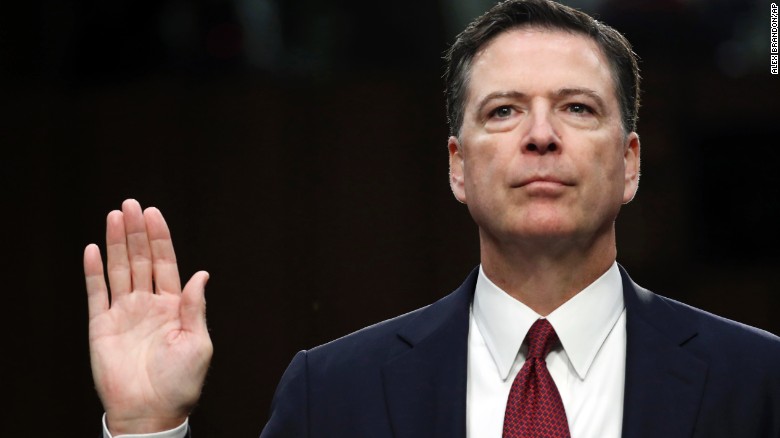
Broken: What James Comey taught us about us

Here are the lessons I learned from this week. And I wish more people would talk about them, because I believe they say a lot more about us than anybody on camera.
We have completely given up on transparency in government.
I'm stunned by the constant characterization of Comey's actions as "leaks." The director of a "three letter" agency, a career public servant, released a complete and unabridged first-hand account, with full personal attribution of matters that he believed to be in the public interest. When did we become so cynical that an act of transparency is viewed with suspicion? We have the Freedom of Information Act, which FORCES government agencies to release information just like this. And, when a judge enforces it, we celebrate it as a coup. Even sympathetic coverage is using the "l-word".
What Comey did that was so stunning, that shook us to the point of suspicion, was to break ranks, to drop the "party line" and put disclosure of government activities ahead of, quite literally, his job. It's sad to see that such a simple act would come as a surprise.
We are living in a sort of "truth inversion"
In weather terms, an inversion is when a layer of air is trapped beneath another layer, preventing natural circulation and pollutants from getting out. In social terms, the truth has been trapped beneath a layer cynical and self-serving spin for so long that we no longer accept the truth, on its face, as good enough. Instead we expect proof, beyond an unreasonable doubt, that the speaker isn't lying.
If our court system worked that way, no witness would ever be considered credible. Yet, in today's politics, we can dismiss the word of a career law enforcement professional, placed in positions of the highest public trust again and again, simply on the basis that nobody can prove he isn't lying. There is no longer an assumption of truthfulness, from government, from media sources, or any other speaker. And that - if you think about it - puts our entire reality into subjective doubt.
We are almost pathologically protective of our reality bubble.
This is nothing new. Many studies and scholarly papers have been written about the tendency of people to reject new information, even if it is better or more likely to lead to success, in favor of known, flawed information with which we are comfortable. But we have turned this tendency, through social media and selective, tribal consumption of information into something fundamentally destructive. We have managed to build massive, mutually exclusive information bubbles that are self-feeding, self-reinforcing, and becoming increasingly removed from objective reality (there is actually such a thing).
People supportive of the president came away dismissing Comey's testimony (and his motives). People opposed to the president took everything he said as gospel truth. It can't be both, yet both narratives are carrying equal weight in the aftermath.
The most disappointing conversations I've had lately have been with fellow liberals who are literally angry about the inclusion of "conservative" hosts "taking over" the liberal-leaning channel MSNBC. We have been railing together against "fake news" for the better part of a year. But all of a sudden, a network whose editorial and production values have been considered trustworthy by these friends is now suspect, solely because a person is sitting in front of a camera who may have a differing philosophy of government. As if this sole fact makes a person less capable of informing the public. We've got to stop this.
Comey's testimony may or may not, in your view, be game-changing. But we need to pause and look critically at WHY we are coming to one conclusion or another. We deserve a transparent, honest, and objective government and public officials. But we will only get those things if we demand them. And, frankly, we need to learn again how to recognize it when we see it.
Friday, June 2, 2017
Is it okay to make fun of Donald Trump?
This week, comedian Kathy Griffin raised a huge uproar with a photo prank that fell more than flat on its face. And it got me to thinking: where's the line? What's the right approach in this climate?
Without a doubt, political speech is the most broadly protected form of expression in America. And satire has a unique way of making points that straight-laced commentary can struggle to achieve. So, yes, it's "okay" to make fun of this or any president.
But is it effective?
Truthfully, this is a larger question than satire or comedy or even snark. Since election day, the country has been ratcheted up like everyone has been crushing Monster drinks and caffeine pills. Town halls are raucous and borderline hostile. I'm as frustrated as anybody, and this is our right. But, at the end of the day, messages are meant to be received. And from where I'm sitting, nobody's listening. In fact, social media blocking of angry constituents is just the latest wave in a concerted effort to ignore those demanding answers.
Is it time to change tactics?
If we are simply looking for catharsis, then nothing feels better than a good, full-blown, fist-shaking vent. Doubly good if it's laced with some pithy sarcasm. But if we are looking to be taken seriously and to effect serious change, perhaps it's time to set a different tone.
Conservative media and cynical Republican officials are looking for ANY excuse to discount what we have to say. And they will take any incident, no matter how isolated, and paint us all with that same brush. As resisters, we have an obligation to represent each other and the movement in a positive light. Because only by holding the highest standards as individuals will we be able to lift up the rest of the movement and add our credibility to theirs.
We have serious issues to address. Social justice, battling corruption, protecting and supporting minorities and marginalized groups, a healthy and educated population for the future. These issues demand serious people, smart on the facts, making an unassailable case. These issues demand a resistance movement that cannot be ignored. As Thomas Jefferson said about the purpose of the Declaration of Independence, "to put the matter before the world, in terms so plain and firm, as to command their assent."
Keep resisting, my friends; command their assent!
Tuesday, May 16, 2017
The "Big Checkout" - How We Justify Disengagement
In modern American discourse, the word "Big" has become a pejorative. "Big Pharma" "Big Banks" "Big Business" "Big Media" and let's not forget "Big Government". America is the most affluent and powerful nation in human history; but is the down-side that everything is so bigly big that individuals feel hopelessly powerless? And, if so, what do we do about it?
These big institutions are the culminations of decades of success, built brick by brick and year after year, on the principle that growth is always good and more is always better. Bigness have given us more choice and more availability of practically anything we could want or need at any time, day or night. And that's a good thing. But...
"Bigness" creates a unique dynamic between the "big thing" and those under its influence, and it can be most easily observed in the world of cable TV providers. Nobody really likes them. Nobody's very satisfied with their costs, options, or service level. Yet most of us remain customers, because there really is no comparable option or alternative. Customers are trapped. So, even though the cable companies continue to have huge customer bases (and profits), the relationship is not a cheerful one. As a result, customers just hold their nose and disengage, always watching for some alternative.
Examples of this are literally everywhere around us. In retail, the airlines, in media, and - yes - in politics. And this ever-present passive-aggressive semi-surrender mindset of the average person in daily interactions, that are are needed but wholly unsatisfactory, is something that has polluted our attitudes toward political engagement in an extremely damaging way.
I view it as a cycle. It's hard to figure out exactly where it starts, because it feeds on itself.
- Politicians lie
- People are cynical about politicians
- People disregard what they are saying and doing
- Politicians get to do things without the voters paying attention
- Companies and interests get to influence politics without accountability
- Things get worse for individuals, better for the interests
- We don't have context to understand anymore, so we have to rely on the politicians to explain it
- Politicians need to get re-elected
- Repeat...
It's this cycle of dissatisfaction and codependency that repeats until we find ourselves completely detached from the process we actually own. And just like the cable company, we hold our noses and disengage, always watching for some alternative. We rant about it, but don't take any accountability. We forget that governing doesn't just happen in an election year. We've reduced our role in the democratic process to a single act on a single day. And when we DO engage, we are either low information voters or we're just too disgusted to vote at all.
There are only two ways to deal with an unspeakable mess: you can light it on fire and walk away (tempting), or put on a mask and grab a shovel (unpleasant and exhausting). I get why a lot of people, frustrated by the unspeakable mess of "big government," would rather choose the first option. In fact, I think that really describes what this last election was about for many. But, while it may have felt gratifying, it doesn't fix anything. We've got to grab our shovels. We've got to wade into the mess we helped create and clean it up. And we've got to stick with it to keep it clean. We can't merely leave it for once every four years.
If you want to take on the "Bigs" of this world, you've got to start small. Ask questions, talk to local officials, attend a city council meeting or a school board meeting, attend a party meeting in your local district. Find out what the reality is on the ground right around you. Then get your shovel. If you're already engaged, then it's your job to show people that small things and small steps make a difference. There are a lot more of us than there are of them.
Thursday, March 30, 2017
What you don't know about military veterans (Part 1 of 2)
"Thank you for your service."
Conventional wisdom says conservatives are staunch backers and supporters of the military and veterans. Liberals, not so much. As a veteran and a liberal, I've got news for you. Neither side seriously considers or understands the issues, needs, or perspectives of those who served and continue to serve today. And, to be honest, I'm kind of tired of the platitudes.
In the 60's, liberals were the original "Flower Children" opposing the Vietnam War. Opponents of the war treated returning veterans shamefully afterward. Three decades later, many Democrat officials opposed the invasion of Iraq. Ironically, both of those actions have come to be viewed as historical mistakes, but that has done nothing to lessen the narrative that liberals are "doves" and "hippies" and therefore dislike the military as a matter of principle.
Even my fellow liberals are surprised when they learn that I have a long, multi-generational military background. Sadly, this particular piece of conservative mythology has seeped across party lines to the point where it is almost universally accepted as true. The truth is, red or blue, support for the military is more of a prop than a genuine, heartfelt belief.
There's a joke:
"How many Vietnam Veterans does it take to screw in a light bulb?"
"I give up, how many?"
"You weren't THERE, man!"
In those three lines, you can find a whole host of lessons about understanding the military culture. If you're not sure you should laugh or why, there's a reason. Let's call it "Civilian Privilege".
You may not think of veterans as a "Marginalized Group" and I can understand that. Veterans, by and large, have enjoyed special access to services, support, and recognition that many groups have not. Add to that the inherent strength that is associated with the US military, and it would be easy to dismiss the idea of veterans as a minority or class at all. And that's sort of the problem.
According to the Department of Veterans Affairs, about 7% of the American populace living today ever served in the military. The LGBT community is somewhere around 5-6%. The African American community is around 12-13%, and the Hispanic community about 17%. Statistically, that puts veterans in a sharp minority, comparable with other protected classes.
Did you know that the US military has been in virtually constant hostile action since OPERATION: DESERT STORM in 1991? That's 26 years. Entire careers have been spent deploying from conflict to conflict. Were you aware that there are still over 8,000 US troops in Afghanistan today? Most people aren't. That's because, in modern America, nobody has to sacrifice to support ongoing war efforts overseas. The shelves are full. There's no rationing. And news cycles just sort of blow through periodic spurts of coverage when things go sideways. We've got very short attention spans. You can turn off your television, close your front door, and forget entirely that there is a segment of the population that has spent two and a half decades in harm's way, and that nobody comes home unchanged from that. That's the very definition of privilege.
Americans are absolutely shameless in brief, shallow, pre-fabricated displays of patriotism and support for veterans. We stick a flag out on a holiday, or post a meme on Facebook and call it good. It's exactly the same sort of co-opting we do during Black History Month. We talk about Fredrick Douglass, Harriet Tubman, and Martin Luther King for a week and walk away feeling like that qualified as substantive support and understanding. Nonsense, right? But, when it comes to veterans, we don't have that same feeling in our guts - that feeling of knowing that we are doing ourselves, our history, and our posterity a disservice by relying on token gestures.
So, red or blue, left or right, when people wave their little plastic flags and say "support our troops," in my heart of hearts, I say the same thing: "You weren't THERE, man!"
In Part 2, I'll discuss common veteran perspectives and how we can do a better job of actually engaging them.
Saturday, March 25, 2017
How do we take big money out of politics? You just did.
The defeat of the American Healthcare Act (aka TrumpCare, RyanCare, or TRyanCare) was a win for people who don't want to see tens of thousands of people left out of a basic need of all citizens. But it was more than that; it was the culmination of three months of concentrated grass roots engagement and activism by voters who, like me, just showed up. And that's the bigger lesson in all of this.
Campaign finance is a mess. Corporate and fringe political interests have held sway for far too long. But in 2017, people have proved that no amount of money can outweigh genuine engagement on the part of the electorate.
Our message was clear. Our efforts were focused. Our determination was palpable. It changed things. And it didn't cost a dime.
The conversation around politics has changed since election day. The ubiquitous "they" is no more. We are talking about policy in the first person. "How will this affect us?" "Do we need this?" "What can I do?" There is no greater power in the American model than an informed and energized voting public.
This is just the first step. A victory feels good. But now the veil has been pulled back. We see the bad actors, the gross incompetence, and the real interests that are driving our legislatures and national government into the ground. There's a lot more work to do. So, take a moment, look around, and savor the victory. Then roll up your sleeves. We've got more to do. And we can't be bought.
Sunday, February 26, 2017
Can't We All Just Get Fiscally Conservative?
I confess. This article isn't about what it's about. Okay - it's a little bit about that. I mean, yes, liberals should be (and I think we are) every bit as fiscally conservative as our conservative counterparts. But that's just one example of what I'm really getting at.
I'm talking about "inverseness." The idea that being one thing automatically makes it the polar opposite from a complimentary thing.
The nod to Rodney King in the title is intentional. His brutal beating following a high-speed chase by LAPD officers led to the 1992 LA riots. It felt for a while like the whole city was at war. Then Rodney King himself went on television and issued his now-famous "Can't we all get along" speech. He recognized that, in all of that anger, everyone loses. Here is a little more of what he said:
The division in our political world today is almost entirely artificial. And it all stems from the idea of inverseness. If I'm a conservative and I say I believe in, say, school choice, then my automatic assumption is that a liberal does not. I also believe that, naturally, I am right and, therefore, the inverse view is wrong. If I say #blacklivesmatter, then the automatic assumption of a conservative audience is #bluelivesdont. This is patently ridiculous, but I think most of us recognize the truth in this observation.
The problem with inverseness is two-fold. First of all, it assumes the there are only two answers to any question. Heck, even most multiple choice tests give you four! And those just tell you to pick the "best" answer, not the right one. Secondly, inverseness totally absolves us of having to listen to anybody, or even ask, because we assume we already know. If I'm for it, you MUST be against it. We couldn't possibly have something in common; that's not how political views work.
I've got news for you: yes it is. We've just been doing it wrong for a very long time. If you want to know what somebody actually believes, the dumbest possible way to figure that out is to assume based on their ballot selections. Ask the open question. And listen to the answer. I might just surprise you. Oh - and stop calling me a "tax-and-spend liberal." That's a bumper sticker, not an actual thing.
I'm talking about "inverseness." The idea that being one thing automatically makes it the polar opposite from a complimentary thing.
The nod to Rodney King in the title is intentional. His brutal beating following a high-speed chase by LAPD officers led to the 1992 LA riots. It felt for a while like the whole city was at war. Then Rodney King himself went on television and issued his now-famous "Can't we all get along" speech. He recognized that, in all of that anger, everyone loses. Here is a little more of what he said:
"We've got to quit - we've got to quit; I mean after-all, I could understand the first - upset for the first two hours after the verdict, but to go on, to keep going on like this and to see the security guard shot on the ground - it's just not right; it's just not right, because those people will never go home to their families again."
The division in our political world today is almost entirely artificial. And it all stems from the idea of inverseness. If I'm a conservative and I say I believe in, say, school choice, then my automatic assumption is that a liberal does not. I also believe that, naturally, I am right and, therefore, the inverse view is wrong. If I say #blacklivesmatter, then the automatic assumption of a conservative audience is #bluelivesdont. This is patently ridiculous, but I think most of us recognize the truth in this observation.
The problem with inverseness is two-fold. First of all, it assumes the there are only two answers to any question. Heck, even most multiple choice tests give you four! And those just tell you to pick the "best" answer, not the right one. Secondly, inverseness totally absolves us of having to listen to anybody, or even ask, because we assume we already know. If I'm for it, you MUST be against it. We couldn't possibly have something in common; that's not how political views work.
I've got news for you: yes it is. We've just been doing it wrong for a very long time. If you want to know what somebody actually believes, the dumbest possible way to figure that out is to assume based on their ballot selections. Ask the open question. And listen to the answer. I might just surprise you. Oh - and stop calling me a "tax-and-spend liberal." That's a bumper sticker, not an actual thing.
Monday, February 20, 2017
Taking Back the Kitchen Table
By now, you've heard me assert in more than one way that old saw, "all politics is local." And in previous articles, I've discussed how the Democrat Party has abandoned local politics for the national stage. That's caused us to lose sight of the reality on the ground.
Conservative media paints a much darker picture than reality, deftly coupling financial concerns with fear-baiting tactics aimed at immigrants and terrorism, and that's energized their base in some ways that don't necessarily fit the facts. But it ain't all rosy either.
In a nutshell: liberals need to get back to the kitchen table, the heart of American life. It's ground zero for financial issues, healthcare issues, education issues, and the all-around quality of life that families are dealing with. It's where things get discussed and decided. And it looks nothing at all like the DCCC's national platform. Let's look at the lay of the land.
46% of Americans say that a $500 hit to their monthly budget would be financially disastrous. Over 70% of Americans have less than $1000 in the bank. The average American has over $130k in debt, $16,000 of it in credit cards and $28,000 in a vehicle loan. They are upside-down on their cars and homes, and perpetuating it through refinancing and extended-term loans that keep them there. (Ask me later about the damage that decades of unrestrained lifestyle marketing has done to our society.)
Meanwhile, the average American between 55-64 years old has just $100k in retirement savings (about a third have NO retirement account at all). In a post-pension economy, people haven't adapted their spending and savings practices to prepare for retirement. As a result, people have to just keep on working longer and longer. Besides being a personal strain, that stagnates the job market, too.
Two thirds of Americans are clinically overweight, the precursor for a host of long-term medical conditions and a major factor toward productivity in the workplace. A third are clinically obese and are in immediate jeopardy of significant medical issues. Almost two thirds of adults are on some kind of prescription medication. Two-income families have become the norm just to stay afloat. People are tired, stressed, and feeling increasingly helpless in managing their own destinies.
If you want to be relevant in the political spectrum, you have to recognize this. You have to get back to the kitchen table. That's what our 45th President did. For whatever else you may think, he got this one right. The Republican Party OWNS the kitchen table. The big money Super PACs and think tanks don't actually care about these folks; they are simply tapping into their circumstances to further a larger pro-corporate agenda. And that's the awful irony of the whole thing.
The good news is, we are all experts! We don't need focus groups or polls. This is OUR reality. The bad news is, the Party is completely focused on Washington. We are going to drag them along with us or, potentially, leave them behind.
This is also where outreach begins. Before you ask for a vote or to post a sign or support a rally, or - heaven forbid - ask for money, offer a hand. Find out the core issues in your community and start looking at how to tackle them together. If you believe in the core liberal values of Equal Opportunity, Equal Dignity, and Equal Justice, as I do, then this is where our attention is needed most.
Wednesday, February 8, 2017
America's Most Pressing Infrastructure Problem
And, no, it ain't potholes.
As a resident of Maricopa County, Arizona, I have the dubious honor of living in the only major metropolitan county in America that went for Donald Trump. That puts me in a unique position to explore the dynamics that led up to where we are today. And, from what I've seen so far, we have a major infrastructure problem.
During the campaign, I was surprised that our home didn't get a single call. There were no flyers, nobody offering lawn signs. Nothing. After the election, I tried to get in touch with my local Democratic Party folks. It was kind of like trying to spot a coyote. There were signs that they existed, but making contact was damn near impossible. We just. Had. An. Election! The party should have been at its peak.
When I did make contact, I was disappointed to learn that, in my district, ten of the twelve precinct committee seats were vacant. I attended a party meeting and found four regular attendees. (there were a LOT of first-timers, though). I was a little bit heartbroken to see it. According to the news, Clinton has this legendary machine and vaunted "ground game." And Arizona was considered "in play." Where the hell was everyone?
That was when I knew: things are not as they seem. What's more: it was all my fault.
Tip O'Niell famously said "all politics is local." It's been interpreted and applied many different ways, but here's how I take it: we are the party, and we aren't showing up for work. The National Democratic party hasn't been putting any money into local races. That's disappointing, but, honestly, who would they mail the check to?
The Democrat Party is rightly associated with the Civil Rights Movement and Women's Equal Rights. These became national issues, because certain regions of the country simply wouldn't get on board on their own. We needed the Federal Government to weigh in and draw the line. But those are extreme examples that have become the default solution. We are a federal republic. The more decisions are made locally, the more relevant they are to the people who have to live with (and pay for) them. And besides, how do you groom talent for national office if you don't have a so-called 'minor league' team to pull from?
It's not enough to vote. It's not enough to send a check. It's not even enough to protest. We have to roll up our sleeves, dig in, and participate. I challenge you to find your local legislative district TODAY and contact the party representatives. Not the elected officials, the worker bees! Find out when the next meeting is scheduled and GO. If what you see scares you, then it's your job to help fix it.
As a resident of Maricopa County, Arizona, I have the dubious honor of living in the only major metropolitan county in America that went for Donald Trump. That puts me in a unique position to explore the dynamics that led up to where we are today. And, from what I've seen so far, we have a major infrastructure problem.
During the campaign, I was surprised that our home didn't get a single call. There were no flyers, nobody offering lawn signs. Nothing. After the election, I tried to get in touch with my local Democratic Party folks. It was kind of like trying to spot a coyote. There were signs that they existed, but making contact was damn near impossible. We just. Had. An. Election! The party should have been at its peak.
When I did make contact, I was disappointed to learn that, in my district, ten of the twelve precinct committee seats were vacant. I attended a party meeting and found four regular attendees. (there were a LOT of first-timers, though). I was a little bit heartbroken to see it. According to the news, Clinton has this legendary machine and vaunted "ground game." And Arizona was considered "in play." Where the hell was everyone?
That was when I knew: things are not as they seem. What's more: it was all my fault.
Federalism: The Liberal's New "Shovel-Ready Project"
Tip O'Niell famously said "all politics is local." It's been interpreted and applied many different ways, but here's how I take it: we are the party, and we aren't showing up for work. The National Democratic party hasn't been putting any money into local races. That's disappointing, but, honestly, who would they mail the check to?
The Democrat Party is rightly associated with the Civil Rights Movement and Women's Equal Rights. These became national issues, because certain regions of the country simply wouldn't get on board on their own. We needed the Federal Government to weigh in and draw the line. But those are extreme examples that have become the default solution. We are a federal republic. The more decisions are made locally, the more relevant they are to the people who have to live with (and pay for) them. And besides, how do you groom talent for national office if you don't have a so-called 'minor league' team to pull from?
It's not enough to vote. It's not enough to send a check. It's not even enough to protest. We have to roll up our sleeves, dig in, and participate. I challenge you to find your local legislative district TODAY and contact the party representatives. Not the elected officials, the worker bees! Find out when the next meeting is scheduled and GO. If what you see scares you, then it's your job to help fix it.
Subscribe to:
Posts (Atom)