Tuesday, September 26, 2017

Symbols of Division

“For the first time in my adult life, I am really proud of my country because it feels like hope is finally making a comeback.”
When I first heard Michelle Obama say these words in February 2008, I was taken aback.  If I’m being completely honest, I was a little angry about it.  I didn’t realize at the time that my privilege was being confronted.  I knew that this nation was far from perfect, but the idea that someone could find nothing to be proud about was something I was not equipped to hear at the time.  I’m a work in progress.

Nine years later, I’ve learned a lot about the different lenses through which we all view the American experience.  I’ve learned that, for many, those lenses genuinely make it hard to be proud of the state of our Union.  And, because of that, the same symbols a hetero white male like myself see as unifying (or at least innocuous) take on a much darker meaning to those for whom our imperfect nation has been neither kind nor just.

From confederate monuments to sports mascots to the national anthem, symbols have been much on our mind of late.  And I think its worth a moment for us all to consider just what symbolism is.  In my very best 3rd grade English, it’s “using a thing to represent an idea”.  But who owns the idea and who infuses it into the thing?  And how does that change over time?

Take the swastika, the most recognizable and notorious symbol of the 20th century.  Do you think the Nazis invented it?  Ancient civilizations from India to Greece used the swastika as a symbol of strength and divinity.  Today, we view it in the context of the Third Reich and the Holocaust.  Many pagan symbols were co-opted by the early Christian church as a way to absorb those cultures under an expanding Roman empire.  The bottom line is, things change.  No symbolic meaning is immutable.  The good can be corrupted and the corrupt can be redeemed by events large and small.  

The passage of time isn’t the only reason for differing perspectives on the meaning of a symbol.  Life experience in the shadow of a symbol can impart wholly different meanings on the same icon.  Imagine every morning a big red truck drove down your street.  If you lived on the right side of the street, people came out of the truck and hosed you down and beat you.  If you lived on the left side, different people came out and handed you food.  I imagine the symbolism of a red truck would inspire both hope and fear, depending on what side you were on.  

We can have opposite and equally valid reactions to a symbol.  And allowing you your reaction does not detract from mine (because the thing is not the idea).  A reaction that you didn’t expect or consider is an opportunity to learn and see things from a different lens and become an ally.  To grow.

So if you can accept the idea that symbolism changes over time and can be drastically different, based on your own experience, then there is no sacrilege in asking “what is it you are trying to promote here?” and “would another symbol promote the same thing without the mixed messages?”  Our values, our truth, come from inside.  We can love our nation and still face its faults.  We can hold something dear and still respect someone else who sees it differently.  We can be proud and still understand why someone else finds it extremely hard to be.  Ideas matter more than things and people matter more than ideas.  Choose people.  We have to get past the flash point of our personal outrage and get to the conversation that matters.  

Thursday, August 31, 2017

No, "Whiteness" is Not Under Attack

...White Privilege is.

The White Supremacist march and Heather Heyer's murder ripped the bandage off a still-open wound in America:  racial hate.  The backlash against anyone that equivocated on the issue, up to and including our president, was immediate and clarion-clear.  No.  Just, no.  But, with almost Newtonian precision, the equal and opposite reaction inevitably came.

There is a small, but insistent counterpoint in America that asserts that "Whiteness" is under attack.  First of all, I'm not sure, and never have been, what "Whiteness" is supposed to entail.  But I do see the very real pinpoint pressure that is inevitably penetrating the white bubble.  And that is being met with strong resistance among many who don't want that bubble popped.

This article is for the ones in their bubbles.  From a white man who had his popped and lived to tell the tale.  My message: stop fighting it.

If I had to define "Whiteness" I suppose I would have to use the word naiveté.  Our history and heroes are carefully disinfected and sanitized to remove any of the warts of reality or controversy.  Our holidays and patriotic remembrances are purged of any burden of conscience.  And our systems are inoculated with isolated examples of transformation, just enough to let us off the hook.  And, sustained by this cocktail, we can walk through life with rose-colored glasses, completely blind to the much larger and more complex reality of the American fabric.

I've always struggled with my German heritage.  My family came to the US well before WWII and my grandparents served in the US Armed Forces during the war.  As an Army brat, I was raised in Germany on an American base, an army of occupation still, in a 2,000 year-old city surrounded by relics both ancient and modern.  I learned that Germans had not erased their national shame, but confronted it and placed it centrally in their culture, so to never repeat it.  It didn't make me proud, exactly.  More like determined.  

Then I moved back to the states.  And, for the first time in my life, I was relentlessly tormented as a "Nazi".  There was no explaining to these people that (a) I was an American, (b) came from a multi-generational family who served in the American military (c) modern Germans are more determinedly anti-fascist than they could conceive.  They wouldn't hear it.  I retreated socially and kept my head down until we were tapped to move to our next base.  I didn't realize it at the time, but I'd just had my first brush with "otherness".  

I don't tell you this to evoke your sympathy or to ingratiate myself to any person or group.  I say it because what I learned was the importance of confronting one's history head-on.  Of owning it.  Of realizing that it is beyond my power to take back from the pages of history, but it is my duty to both carry it forward and make sure those lessons are not forgotten or re-lived.

That's where American "whiteness" fails us all.  Instead of confronting and coming to terms with our history and its very real ongoing impacts to people of color, we sink into our bubbles.  We deny, deflect, and "whatabout" with ridiculous statements like "all lives matter" and - the absolute worst - "political correctness."  When you don't treat a wound, it festers.  It gets infected.  And your problems multiply beyond the point where the original wound is no longer even recognizable.

My white friends who are struggling with this often say "I shouldn't have to keep apologizing for something I never did!"  Yet they continue to celebrate their white-sanitized version of America, not realizing that their continued denial is, in itself, doing damage.  Let me explain something.  People of color don't want Bob Smith to apologize for the sins of your ancestors.  They want Bob Smith to acknowledge that those things happened and still happen today.  They want Bob Smith to be an ally.  When you wake up.  When you pop the bubble.  When you SHOW UP in support for people that are still struggling against institutional and cultural racism and acknowledge it for what it is, that whole "apologize for my ancestors" thing goes away.  Take it from a German.


Sunday, August 13, 2017

Is the President a Racist?

SPOILER ALERT:  No, I truly don't think so.  But that shouldn't make you feel any better.

I'll get more to the president in a moment.  But first, let's lay a few things out there.

First, there's a big difference between the political spectrum of ideologies and actual legitimate political parties.  Let's have the sophistication to separate the two.  Not all ultra-conservative (reactionary) ideologies are related to (or welcome in) the Republican Party, just as not all ultra left-wing ideologies are related to (or welcome in) the Democrat party.  Sovereign Citizens, anarchists, eco-terrorists, Marxists, and other fringe ideologies do not have a foothold in either party.  Just because someone is classified as "far left" or "far right" in ideology doesn't merit legitimate actors and parties being pasted and smeared with their acts or words (Anybody who does is lying to and manipulating you and should not be trusted.)

Extremists on either end of the political spectrum are fundamentalists, with binary values (I'm right, and everyone else is wrong), and prone to violent expression (whether physical or just in rhetoric).  The "conventional" political spectrum, in which the Republican and Democrat parties operate are, in effect, the moderate middle (I know that's hard to believe).  Because, no matter how much we disagree, we all believe that participation in the processes and institutions of our Constitutional Democracy is the way to effect change.

Second, you either operate within the political apparatus (parties, PACs, votes) or outside of it.  There are people who have extreme ideologies who operate inside the apparatus, and those people tarnish anybody or any organization that suffers them.  David Duke espouses ideologies (white supremacy) that are FAR outside any party platform, but is tolerated within Republican circles.  That brings into legitimate question how tolerant the Republican Party is of such attitudes.  Conversely, there are moderate groups with mainstream ideology and sentiments that are not directly involved in party politics.  Non-profits, advocacy groups, churches: these are all examples of institutions that share certain ideologies but don't operate primarily in the political machine.

Recapping:  You can be an extremist insider or a moderate outsider or any combination of them.  It's important to understand where players are on the spectrum.

Third, let's be clear about the difference between violent political ideologies and incidents of opportunistic violence.  A march by the non-violent and social justice #BlackLivesMatter movement that is co-opted by hooligans and thugs is not the equivalent of anarchists or white supremacists harming people and property as a vehicle for their ideology.

Thanks for your patience.  Now to the matter at hand.

I do not believe the president is a racist.  That's no vindication; I actually believe that his inability to empathize with other human beings makes racism basically irrelevant to understanding him.  But he's the president, and he's accountable for the environment and people around him.  And that's where we get to the root of the current situation.  I said before that fringe groups are basically binary; so is the president (albeit for different reasons).  And therein lie the inescapable parallels and attraction between the two.

The president has inarguably surrounded himself with racists and advocates of racist (and generally hostile toward all marginalized groups) policies.  Bannon, Miller, Gorka, and Sessions have clear records and agendas.  No sugar coating it: they're straight-up racists.  There haven't been so many race-hostile people in the executive branch in decades, and that makes a clear statement.  He can't possibly distance himself from racism philosophically when he can't distance himself physically.

And then there's the president's policy agenda, starting, most significantly with his absolute determination to erase everything about this nation's first black president.  There is nothing that white nationalists want more than to eradicate Barack Obama's legacy from the annals of American history.  It's easily thrown off as pettiness (and to him it probably is), but make no mistake, this is a bright neon sign to those fringe so-called "alt-right" elements.  His "victims of Obamacare" charade is like a guestbook of aggrieved whiteness.

Simultaneously, in his "win or lose" brain, the president has bought in to key elements of the white nationalist "America under attack" mantra.  That is, immigrants from Central and South America, and Middle Eastern Muslims.  And he has laid down aggressive policy agendas to "fight back" against these false threats.  Again, he's gone so far as to create "victims lists" and "undesirable" lists and published them.  These policies are precisely the sort of "victories" that politically-minded fringes are looking for.

So, if he's not a racist (according to me, anyway) why won't he denounce, by name, the white supremacists who support him?

Those who have examined the president most closely describe him has having an insatiable need to be adored.  That's why he loves the rallies so much.  It's why he also constantly speaks in superlatives.  That hole will never be filled, no matter how much money he makes, how many buildings bear his name, or how many votes he gets.  It will never be enough.  Many have posited that the president might be a "useful idiot" to Putin.  That has yet to be proven.  But, undoubtedly, he is being used as a vehicle for white nationalist/supremacist ideologues, in return for their adoration.

The president is binary, win/lose.  And right now, he's losing.  His popularity is historically, stunningly low.  Who's sticking with him, though?  The nationalists.  He can't let go; that would be admitting defeat.  He's trapped, both by his own psychosis and the team he put around him.  But those nationalists are also operating freely and openly through the edges (but definitely inside) of the Republican political apparatus (see Iowa Congressman, Steve King, for example).  They've been quietly, distastefully tolerated, because they bring votes and money.  They have a seat at the table, even though nobody will admit they invited them.  And that's the ugly elephant in the room for Republicans (no pun intended).

Bottom Line:

There is no place for hate or violence in America in 2017.  The First Amendment gives you the right to spew this garbage, fine.  I served to defend that right.  But let's not kid ourselves.  It doesn't belong here.  And nobody who espouses hate or violence, for any reason in any form, should have a welcome seat in any mainstream political group.

Any reasonable, semi-informed person (let alone seasoned political operative) should be able to distinguish between extremist and mainstream ideology.  Likewise everyone should be able to distinguish between politically-motivated violence and opportunistic rage.  And if you can recognize it, you can tell the difference between righteous condemnation and ridiculous smear tactics.

It should be easy, therefore, to reject and condemn extremism and violence, no matter what your party affiliation or ideology.  Nobody should think for a moment that rejecting white supremacists should have any political implication.  But when the rats are in your midst, it gets a lot harder to deal with the traps.

Tuesday, August 8, 2017

Why Did Liberals Lose the Working Class?

Of all of the narratives perpetuated by the conservative media machine, the most damaging (and mystifying) has got to be that liberals and Democrats don't care about the "little guy," the working class.  When it comes to policy record, it couldn't be clearer that massive corporate interests are in the driver's seat in conservative circles, yet somehow the working class narrative sticks.  How did we get here?  How do we set the record straight?  I have a few ideas.

1. The "Spectator-ization" of the American Electorate
There are a lot of different ways to be involved in policy-making.  Running for office is just one (and the most specialized) way.  During the 20th century, being a union member was the best way for individual Americans to be directly involved in influencing policy that affected them.  It was real, it was concrete to observe conditions in the workplace, hiring and firing practices, and, of course, wages, and to say "this isn't right."  Unions provided a direct conduit to corporate leaders and, importantly, the political structure, to address grievances and improve conditions.  More often than not, unions found friends in the Democrat party.

But things have changed.  Union memberships are down significantly (about 33%) across the country.  And, in their decline, corporate interests have been able to pass right-to-work laws across 28 states.  Not surprisingly, these are "Red states" where the pro-business Republicans were only too happy to ingratiate themselves to their benefactors.

The result of this trend has been to make politics and policy less relevant to individual Americans.  They have become spectators to a process they used to help shape. And, with that, has come the hollowing out of the core participating base of the Democrat party.

Enter: Citizens United.  Corporate interests didn't stop by disenfranchising tens of millions of voters from direct participation in the democratic process (not elections - the democratic process of governing).  They wanted even more influence.  And that means buying it.  Election after election, the spending totals spiral more and more out of reach of ordinary Americans.

We now consume politics through cable news, rather than our daily life.  We are spectators, watching so-called "elites" take all the power and money and making all the decisions.  And, with each iteration of the cycle, the Republican/Corporate machine sinks its claws in deeper.  And, likewise, wage inequality gets worse and worse.

2. The False Conservative Narrative
If conditions have materially worsened during the progress of the Corporate-Republican march, how is it that the average American hasn't turned away?  Well, once direct participation through union membership waned, they were able to re-shape the narrative and, in so doing, invent new narratives to keep people focused on other villains.  And their villains of choice?  Globalization and Immigration.  It's worked beautifully.  Ask almost any conservative voter and they will tell you the reason their pay and benefits stink are because of one or both of those two factors.  Heck, ask many liberal voters and you'll probably hear something similar.  "Those people" are taking our jobs and doing it for cheap.  And who is going to tell you any different?  Who has direct, first-hand knowledge of what goes on behind closed doors?  Too few.

3. Very Real Change 
As powerful as the decline of unions and a strong narrative have been, the Corporate/Republican machine didn't orchestrate the whole thing.  The last twenty years have powerfully and irreversibly transformed the drivers of our economy at a scale that hasn't been seen since the Industrial Revolution.  And we haven't kept up.  20th century institutions that built this nation (like coal and internal combustion vehicles) are waning.  And, like a drowning man, they are determined to grab onto anything or anyone, no matter the consequences, to stay afloat.  The real victims in all of that climate of denial have been the men and women employed by those industries.  With no advocates to ensure a transition, people are left to fend for themselves.  I don't care how you vote, that kind of existential threat to your ability to feed your family is scary as hell.  And that kind of desperation has led to extreme factions on the left and right.

A New Promise
The DNC has unveiled their new message.  They call it "A Better Deal."  Nobody asked me or I would have told them that "Promise 21" would have been better branding, but I digress.  The point is, it's time to acknowledge the set of factors that got us here, what we are facing, and remind people who actually is trying to put policy and protection in place that serves and protects the American Worker.

I don't know if labor unions will bounce back.  I don't know if they should in this new landscape.  But whether they do or not, people need to come back to politics.  They need to show up at party meetings and shape the conversation.  They need to see that they have a voice in the process and an advocate in the Democrat Party.  Because getting improved conditions, wages, and support for every American worker is not a spectator sport.  It doesn't filter down from the "elites" at the top.  It starts at the bottom.  And, as we look to the next wave of prosperity leading us into a new and transformed American economy, we need to make sure that working people have a voice and a seat at the table.

Because, at the end of the day, do you want someone representing you who took tens of thousands of dollars from companies with an axe to grind, or do you want that person to be accountable to you?

Sunday, August 6, 2017

ICYMI: Sliding Toward Authoritarianism

I try to be a measured observer.  Even when I agree with people, philosophically, I tend to veer away from alarmist rhetoric.  The sky, most of the time, isn't actually falling.

But I find myself genuinely and unshakably alarmed.  Amidst the salacious and shiny personal scandals that seem to arise almost daily, a number of stories have continued to trickle out that, frankly, make my spider senses tingle.  You probably lost them in all the noise.

There's an ongoing debate about whether our president is an Authoritarian.  People often point to his tendency to praise foreign dictators.  Is it his personality (or its deficiencies), his governing philosophy, or perhaps his core beliefs?  Some combination of the three? In my judgement, it doesn't matter all that much what's driving it; it's the outcomes that matter.  And those outcomes, increasingly and in accumulation, point to an alarming trend of, brick by brick, the construction of an authoritarian state.

As always, I leave it to you, the reader, to form your own assessment.  Here's what I see.

The consolidation of power to a concentrated few (with leverage)
The failure of the Trump administration to appoint dozens of sub-cabinet leadership positions has been the subject of much reporting (so I won't link).  Above that, they have dismissed career officials (dubbed the deep state) across the executive branch without replacing them.  Those he has appointed, to a one, have deep conflicts of interest with the programs over which they preside. Many have significant allegations of corrupt action in their past, often in direct relation with those programs.  This makes these select few especially beholden to their chief executive.

A concentrated effort to obscure
From removing website content, to gag orders on federal employees, to withholding visitor logs, to omitting contacts with foreign officials and their representatives, to blatantly, repeatedly, and intentionally lying to the public, this administration has clearly articulated its position that it is not answerable to the American people.  Its obsession with so-called "leaks" belies its belief that secrecy FROM the constituents it represents is a top priority.

The establishment of a propaganda arm
When the former Communications Director, Boris Epshteyn, joined a largely-unknown Sinclair Media, it was a "shrug moment."  Since then, however, Sinclair, it's broadcast affiliates, and it's digital arm, Circa, have steadily pumped out a pure, synchronized Trumpian narrative.  It's basically the Sputnik/Pravda/RT for the Trump White House.  All the while, they hammer away at the "fake news media," despite the fact that, over and over again, their reporting holds up under pressure.   It is one thing to disagree on the interpretation of common facts.  It is quite another to reject objective reality and substitute it with a political fiction.

An attempt to co-opt law enforcement
In a recent interview with the New York Times, the president admitted he believes the FBI director should report directly to him.  Imagine the resources of a nationwide internal security force placed at the direct whim of a man who has a long-documented pattern of settling scores with his "enemies."  The demand for the dramatic expansion of DHS agents under Customs and Border Patrol, as well as Immigrations and Customs Enforcement (ICE), already feels like the beginnings of a police state.  It should be noted that, in authoritarian regimes across the world, internal security and secret police forces are the most feared, responsible for hunting down and jailing political opponents and dissidents.

The abridgment of due process
In the name of action toward illegal immigrants, this administration has set up so-called "rapid reaction forces" and "streamlined procedures" for ICE.  These terms are shorthand for circumventing the Fourth Amendment to the Constitution.  In this country, EVERYONE operates under the presumption of innocence and is entitled to all aspects of due process.  These "streamlined" actions, however, instead presume guilt and strip people of their rights to representation and trial.  The Muslim Ban on travel and immigration also presumed guilt of those already lawfully admitted to the country and deprived them of due process (as pointed out by the federal courts).
 
Defining an "undesirable class" (or several)
Through rhetoric and policy, this administration has plainly set its sights on a number of non-white groups.  By intertwining undocumented immigrants (and sometimes not even bothering with the 'undocumented' distinction) with rapists, murderers, and gang members, the President is openly asking white Americans to look with suspicion at anyone with brown skin.  By conflating the TINY number of jihadi mujaheddin with the remainder of a BILLION muslims across the world, the president has encouraged white Americans to fear anybody with a beard or head scarf.  He WANTS you to be suspicious and afraid of these "undesirables" and to beg him to help save you from their unsavory appetites.  Every dictator needs a clearly defined enemy.  Add to that the series of decisions that strip equal status and protection for LGBTQ Americans.

Attacking the Democratic Process Itself
The president's claim of three to five million illegal and fraudulent votes post-election seemed like a laughable ego trip.  But the establishment of a Presidential Commission has upped the ante significantly.  Staffing it with conspiracy-promoting fringe types and granting it data-gathering power over the entire electorate is a breathtaking move.  If you operate from the presumption that there are a large number of people on the roles who don't deserve to be and put the force of the DOJ behind it, you can reshape the electorate in any way you like and make Putin-like proclamations about the "real" level of support of opposition to any candidate or official.  You can also proactively focus your money, agenda, and narrative against anyone who emerges that appears to threaten your regime.

And, finally, an attempt to circumvent the constitutional military order through the establishment of a private mercenary army.
In the turmoil of the daily circus that has become the news cycle, an incredible story emerged and was quickly lost in the froth.  In July, Steve Bannon, Chief Strategist to the president, took a proposal to the Secretary of Defense suggesting that a private army made up of mercenaries from around the world should be established to carry out military action in Afghanistan.  The fact that this proposal was rejected by Secretary Mattis is hardly comforting.  It is unlikely in the extreme that Bannon would have made this step without consulting (and getting at least tacit approval from) the president.  A private corporate army, unconstrained by the Uniform Code of Military Justice, the Law of Armed Conflict, and presumably outside the control of the military establishment, should chill the blood of every single American man and woman.  The only other paramilitary forces that operate this way: ISIS and Al Qaeda.

It's possible, even likely, that you'll read this and go "Mike, you're just overreacting.  Cut back on the caffeine."  It's possible.  I hope you're right.  But what if you're not?  Is it worth the cost to wait and see?  Or is it time to put specific, focused, and unending pressure on Congress to see this for what it is and do everything in their power to curtail it?

Monday, July 31, 2017

Slowing our Roll on Healthcare Reform

Last week, three Republican Senators joined the 48 Senate Democrats and struck down a horrific bill that would have kicked 22 million Americans off of healthcare.  After six months of assault, this was a huge relief to members of the resistance who, literally worked day and night to lobby members of Congress to put a halt to it.  It was a good day.

It's only natural in the aftermath to start talking about a path forward.  Where do we go from here?  For those who would say "single payer now," I say: slow your roll.  Here's why:

If you've ever had a child come to you with gum stuck in her hair, that's a pretty good analogy for the American healthcare system.  It's sticky, it's messy, and it's sort of worked into all sorts of things.  Also similar, everyone's got their home remedies, all of which work to varying degrees, but nothing is a perfect solution.  And just yanking at it only makes things worse.

One oft-cited statistic about healthcare is that it represents 1/6th of the American economy.  That should be enough to give anyone pause.  While you may not feel any particular sympathy for the 'big bad insurance companies,' that number represents hundreds of billions of dollars, millions of jobs, and - oh yes - a bunch of publicly traded companies that find themselves comfortably nestled in our retirement accounts.  You simply can't turn an entire enormous industry on its head overnight without some serious consequences rippling across broad sectors of our nation.

So let's just put single payer back in the box for a while.  So, what's left?

It's important to think just a moment about what health insurance as a product does.  Because it's not actually for the patient.  Health insurance actually protects hospitals, ensuring they will get paid for services, ensuring they have the cash flow needed to continue operating.  Health insurers don't really provide the patient anything today.  They are an administrative layer, complete with the added costs of overhead and executive compensation, all conveniently added to the expense that the hospital already charges for care.  What's more, they charge you based on what they "guess" your eventual medical costs will be, whether or not they ever materialize.  This may sound like an indictment, but it's really the beginning of root causes.  If we break it down, we see problems that need to be solved.

  • How do we ensure hospitals are protected from going out of business?
  • How do we ensure health insurance companies profit from improved health, a benefit to the patient and reduced load on the system?
  • How do we ensure people are really paying their 'fair share'?
And, most importantly:

  • How do we ensure everyone gets the care they need without fear of going bankrupt?
There are a LOT of potential answers to each of these questions.  Do we declare hospitals "critical infrastructure" and provide them direct government subsidies (the way we do farms) to offset their shortfalls?  Maybe.  Do we transform the health insurance industry into a health management industry, where people pay for the access to non-medical and screening services that help improve the customer's health profile and limit doctor visits?  Possibly.  Do we transform "insurance" into "membership," where your actual accrued balance is what is used to pay directly for medical services when needed?  Who knows?  The point is, now you've got new, tangible problems to solve.  

And yes, would single payer address those things?  Of course.  But, again, we'd tank an entire industry overnight, throw a bunch of people out of work, sink your retirement account, and probably a mini-recession to go with it.  So let's move forward, but tread lightly.  

Tuesday, July 11, 2017

The Day We Found the Smoking Gun

Today, the President's son released a thread of emails between himself and a Russian associate which solicit a meeting between an emissary and three top members of the campaign.  The email explicitly proposes an arrangement to provide information sourced by the Russian Government in order to assist the campaign.  The email thread, a first-hand source, was sent between June 3rd and 8th.

A lot of people will look at this in isolation and work to explain it away.  And some who are clever enough might even succeed.  None of that actually matters one bit.  What happened on the day, what was gathered in that meeting or as a result of it, none of it matters.

Because this is now the predicate through which we view everything that followed.  Remember this phrase: "knowing that the Russian government was working to support the election of Donald Trump."

  • On June 14th, the DNC announced they had been hacked by the Russians
  • On July 7th Carter Page takes a campaign-authorized trip to Moscow, knowing that the Russian government was working to support the election of Donald Trump.
  • On July 18th, Jeff Sessions meets with Sergei Kislyak at the RNC knowing that the Russian government was working to support the election of Donald Trump, and the Trump campaign subsequently softened language on America's support of Ukraine against Russian aggression
  • On July 23rd, the campaign watched WikiLeaks dump 22,000 hacked emails from the DNC, knowing that the Russian Government was working to support the election of Donald Trump.
  • On July 24th, Paul Manafort said on television that the suggestion of connections between the campaign and Russia was "absurd," knowing that the Russian government was working to support the election of Donald Trump.
  • Also on July 24th, Donald Trump Jr issued a similar denial on another program, saying "it's disgusting; it's phony... I can't think of bigger lies," knowing that the Russian government was working to support the election of Donald Trump.
  • On July 27th, Donald Trump himself issued a similar denial on television.  
  • On September 7, Republican Operative Peter Smith wrote a document recruiting others to help obtain Clinton emails he believed were hacked by Russians, implying in conversations and emails that he was working with the Trump campaign.
  • On September 8, Jeff Sessions meets again with Sergei Kislyak in his Senate offices, knowing that the Russian government was working to support the election of Donald Trump.
  • On September 26 and October 19, Donald Trump stated during two presidential debates that he doubted Russia hacked the DNC, knowing that the Russian government was working to support the election of Donald Trump.
  • Early December, Flynn and Kushner meet with Kislyak in Trump Tower, knowing the Russian government had worked to support the election victory of Donald Trump, and asked to set up a back-channel of communications, possibly directly from the Russian embassy in Washington DC.
  • December, Kushner met with Sergei Gorkov, chairman of Russia's (sanctioned by the US) Vneshecombank (VEB), knowing the Russian government had worked to support the election victory of Donald Trump.
  • Around January 11, Trump emissary and brother of Betsy DeVos met with Putin emissary secretly in the Seychelles, knowing the Russian government had worked to support the election victory of Donald Trump.
  • On January 26, acting Attorney General Sally Yates warned White House counsel that Mike Flynn could be subject to blackmail by Russians, due to his undisclosed conversations.  The White House failed to take action for 18 days afterward, knowing the Russian government had worked to support the election victory of Donald Trump.
  • In February, Trump aides sought to unilaterally lift sanctions on Russia, knowing the Russian government had worked to support the election victory of Donald Trump. 
  • On May 9th, Trump fires James Comey, stating later it was "this Russia thing" and a "phony story," knowing the Russian government had worked to support the election victory of Donald Trump.
  • On May 10th, Trump meets with Russian Foreign Minister, Sergei Lavrov, where he bragged that he fired "nut job" James Comey, and said he "faced great pressure because of Russia" while extemporaneously providing extremely sensitive HUMINT regarding ISIS in Syria, knowing the Russian government had worked to support the election victory of Donald Trump.
As you can see, this new lens absolutely and irrevocably changes the significance of these already shady events.  In isolation, the email is not a smoking gun, but it is a bloody fingerprint that ties the rest of the crime scene neatly together.

Sunday, June 25, 2017

Untargeted: Why We're Wrong About Everyone

As part of an ongoing series exploring privilege and my journey to shedding it, I offer this first installment, a baseline if you will for taking a step toward understanding. Ironically, I see this first step as acknowledging that it's impossible.  And, oddly, how that's a very good thing. 

Of course, all this is merely a wandering exploration of my own understanding.  Renowned sociologists will probably pick me apart.  But that's okay.  

Humans are the strangest of creatures.  We are studies in contradiction.  We draw much of our identity from the groups we inhabit: cultural, professional, societal, and familial, among others.  And, as members of a group, if part of its collective identity is attacked, we cleave to it more strongly to protect our own.  Even "anti-groups" like the Punk Rock movement drew and aligned their identity to the collective.  Having an "us" is the ultimate survival mechanism.  

However, flip that scenario and assume that I, as a member of a group, am DEFINED by the group, and I will, almost reflexively, reject that assumption.  "You don't know me!" I'll say.  And it's true.  Although I'm a (proud) veteran, assuming that I hold certain attitudes or beliefs based on that one fact will provoke a reaction.  Nobody likes to be pigeon-holed.  

Rashida Jones
My statistics teacher taught me something that always stuck with me.  He said "all models are wrong; some are useful."  As a tool for achieving insight, models are incredibly valuable when looking at large groups.  But modelers know that their product is "precisely wrong."  We know that our population lies within +/- 3% of whatever we are stating.  But nobody is an "exact fit."  Now, as I constantly work to unravel my preconceived filters and biases, I realize that this rule is true in a hundred different ways at the same time.  None of us are exactly anything, but simultaneously ALMOST dozens of things.  Which of them is in the proverbial driver's seat at any given time is subject to change, and often a product of our environment.  

So, no matter how much we study, no matter how much we learn, we'll never be right about anyone.  Some see this as a reason to throw their hands up.  But I think it's the basis for a really profound understanding.  We are many things. We are OF many things.  We draw on those histories and traditions as a source of strength (and, sometimes shame).  But, even though I am all of those, in the end, I am uniquely ME, an individual that draws from the collective, but is not defined by it.  And, my friend, so are you.  

So the next time you catch yourself asking "how could a (woman/person of color/LGBTQ person) support her or him or THAT?" check your filters.  And so will I.  It's a start. 

Wednesday, June 21, 2017

Top Down: Why Democrats Aren't Winning

In the aftermath of the latest of this year's string of special elections, the Monday-morning-quarterbacking is, predictably, rolling off every opinionator's tongue.  And it's all over the place.

Why are Democrat candidates losing?  Is it money?  Is it energy?  Are they too liberal?  Too "not-liberal"?  Is it Nancy Pelosi?

In this writer's opinion: None of the Above.

Before I offer my position, let me start with a few questions.

  • What legislative district do you live in?
  • What is a Precinct Committeeperson?
  • Name one person in your legislative district's party leadership
  • When was the last time you had a discussion with someone from the party in your neighborhood?
If you don't know the answers to any of these questions, then (1) you're in good company, and (2) you are a test case to help me explain exactly why we keep losing.  That is: the party foundation is the local legislative district.  And, based on what I've seen and heard, that foundation is pretty shaky.

Every state legislator comes from a legislative district.  The electoral map of the entire country is built on these blocks.  Each legislative district is made up of precincts.  And for every 100 Democrat registered voters in a precinct, the district is assigned one Precinct Committee (PC) slot.  Together, these PC slots are filled (theoretically) with engaged people who are charged with connecting with their neighbors.  They know people directly and personally.  They provide the critical communication link between the people, the LD, and therefore the county, state, and national party.  Pretty important, right?  Right!!

I mean, think about it.  Think about all the questions and theories the pundits are offering.  Why didn't this district turn out?  Why didn't candidate X resonate?  Want the answer?  Ask a PC!  

Too many of those PC slots are sitting vacant.  People don't know about them.  People don't understand them.  People think the Party starts in Washington DC and magically trickles down.  It doesn't.  That's not how it works at all.  It's built from the bottom up.  Without the foundation, the house won't stand.  

If you don't know the answers to the questions above, odds are your LD is not running as well as it could.  But don't take my word for it, check for yourself.  Look up your legislative district (you can google it) and find out how to reach them.  The more you know, the more you realize that all politics truly is local.  

Saturday, June 10, 2017

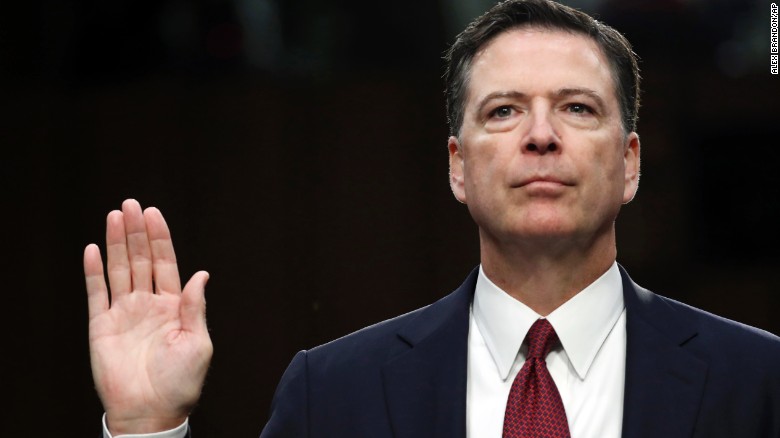
Broken: What James Comey taught us about us


If you watch television, any television, pretty much the only thing that has happened this week appears to be the congressional testimony of ex-FBI Director James Comey.  Depending on your political leanings, it was either a scathing indictment or a tempest in a teacup.  But as I watched the testimony and the coverage, I came away with another conclusion.  We. Are. Broken.

Here are the lessons I learned from this week.  And I wish more people would talk about them, because I believe they say a lot more about us than anybody on camera.

We have completely given up on transparency in government.
I'm stunned by the constant characterization of Comey's actions as "leaks."  The director of a "three letter" agency, a career public servant, released a complete and unabridged first-hand account, with full personal attribution of matters that he believed to be in the public interest.  When did we become so cynical that an act of transparency is viewed with suspicion?  We have the Freedom of Information Act, which FORCES government agencies to release information just like this.  And, when a judge enforces it, we celebrate it as a coup.  Even sympathetic coverage is using the "l-word".

What Comey did that was so stunning, that shook us to the point of suspicion, was to break ranks, to drop the "party line" and put disclosure of government activities ahead of, quite literally, his job.  It's sad to see that such a simple act would come as a surprise.

We are living in a sort of "truth inversion"
In weather terms, an inversion is when a layer of air is trapped beneath another layer, preventing natural circulation and pollutants from getting out.  In social terms, the truth has been trapped beneath a layer cynical and self-serving spin for so long that we no longer accept the truth, on its face, as good enough.  Instead we expect proof, beyond an unreasonable doubt, that the speaker isn't lying.

If our court system worked that way, no witness would ever be considered credible.  Yet, in today's politics, we can dismiss the word of a career law enforcement professional, placed in positions of the highest public trust again and again, simply on the basis that nobody can prove he isn't lying.  There is no longer an assumption of truthfulness, from government, from media sources, or any other speaker.  And that - if you think about it - puts our entire reality into subjective doubt.

We are almost pathologically protective of our reality bubble.
This is nothing new.  Many studies and scholarly papers have been written about the tendency of people to reject new information, even if it is better or more likely to lead to success, in favor of known, flawed information with which we are comfortable.  But we have turned this tendency, through social media and selective, tribal consumption of information into something fundamentally destructive.  We have managed to build massive, mutually exclusive information bubbles that are self-feeding, self-reinforcing, and becoming increasingly removed from objective reality (there is actually such a thing).

People supportive of the president came away dismissing Comey's testimony (and his motives).  People opposed to the president took everything he said as gospel truth.  It can't be both, yet both narratives are carrying equal weight in the aftermath.

The most disappointing conversations I've had lately have been with fellow liberals who are literally angry about the inclusion of "conservative" hosts "taking over" the liberal-leaning channel MSNBC.  We have been railing together against "fake news" for the better part of a year.  But all of a sudden, a network whose editorial and production values have been considered trustworthy by these friends is now suspect, solely because a person is sitting in front of a camera who may have a differing philosophy of government.  As if this sole fact makes a person less capable of informing the public.  We've got to stop this.

Comey's testimony may or may not, in your view, be game-changing.  But we need to pause and look critically at WHY we are coming to one conclusion or another.  We deserve a transparent, honest, and objective government and public officials.  But we will only get those things if we demand them.  And, frankly, we need to learn again how to recognize it when we see it. 

Friday, June 2, 2017

Is it okay to make fun of Donald Trump?

This week, comedian Kathy Griffin raised a huge uproar with a photo prank that fell more than flat on its face.  And it got me to thinking: where's the line?  What's the right approach in this climate?

Without a doubt, political speech is the most broadly protected form of expression in America.  And satire has a unique way of making points that straight-laced commentary can struggle to achieve.    So, yes, it's "okay" to make fun of this or any president.

But is it effective?

Truthfully, this is a larger question than satire or comedy or even snark.  Since election day, the country has been ratcheted up like everyone has been crushing Monster drinks and caffeine pills.  Town halls are raucous and borderline hostile.  I'm as frustrated as anybody, and this is our right.  But, at the end of the day, messages are meant to be received.  And from where I'm sitting, nobody's listening.  In fact, social media blocking of angry constituents is just the latest wave in a concerted effort to ignore those demanding answers.

Is it time to change tactics?

If we are simply looking for catharsis, then nothing feels better than a good, full-blown, fist-shaking vent.  Doubly good if it's laced with some pithy sarcasm.  But if we are looking to be taken seriously and to effect serious change, perhaps it's time to set a different tone.

Conservative media and cynical Republican officials are looking for ANY excuse to discount what we have to say.  And they will take any incident, no matter how isolated, and paint us all with that same brush.  As resisters, we have an obligation to represent each other and the movement in a positive light.  Because only by holding the highest standards as individuals will we be able to lift up the rest of the movement and add our credibility to theirs.

We have serious issues to address.  Social justice, battling corruption, protecting and supporting minorities and marginalized groups, a healthy and educated population for the future.  These issues demand serious people, smart on the facts, making an unassailable case.  These issues demand a resistance movement that cannot be ignored.  As Thomas Jefferson said about the purpose of the Declaration of Independence, "to put the matter before the world, in terms so plain and firm, as to command their assent."

Keep resisting, my friends; command their assent!


Tuesday, May 16, 2017

The "Big Checkout" - How We Justify Disengagement

In modern American discourse, the word "Big" has become a pejorative.  "Big Pharma" "Big Banks" "Big Business" "Big Media" and let's not forget "Big Government".  America is the most affluent and powerful nation in human history; but is the down-side that everything is so bigly big that individuals feel hopelessly powerless?  And, if so, what do we do about it?

These big institutions are the culminations of decades of success, built brick by brick and year after year, on the principle that growth is always good and more is always better.  Bigness have given us more choice and more availability of practically anything we could want or need at any time, day or night.  And that's a good thing.  But...

"Bigness" creates a unique dynamic between the "big thing" and those under its influence, and it can be most easily observed in the world of cable TV providers.  Nobody really likes them.  Nobody's very satisfied with their costs, options, or service level.  Yet most of us remain customers, because there really is no comparable option or alternative.  Customers are trapped.  So, even though the cable companies continue to have huge customer bases (and profits), the relationship is not a cheerful one.  As a result, customers just hold their nose and disengage, always watching for some alternative.

Examples of this are literally everywhere around us.  In retail, the airlines, in media, and - yes - in politics.  And this ever-present passive-aggressive semi-surrender mindset of the average person in daily interactions, that are are needed but wholly unsatisfactory, is something that has polluted our attitudes toward political engagement in an extremely damaging way.

I view it as a cycle.  It's hard to figure out exactly where it starts, because it feeds on itself.
  • Politicians lie
  • People are cynical about politicians
  • People disregard what they are saying and doing
  • Politicians get to do things without the voters paying attention
  • Companies and interests get to influence politics without accountability
  • Things get worse for individuals, better for the interests
  • We don't have context to understand anymore, so we have to rely on the politicians to explain it
  • Politicians need to get re-elected
  • Repeat...
It's this cycle of dissatisfaction and codependency that repeats until we find ourselves completely detached from the process we actually own.  And just like the cable company, we hold our noses and disengage, always watching for some alternative.  We rant about it, but don't take any accountability.  We forget that governing doesn't just happen in an election year.  We've reduced our role in the democratic process to a single act on a single day.  And when we DO engage, we are either low information voters or we're just too disgusted to vote at all.  

There are only two ways to deal with an unspeakable mess: you can light it on fire and walk away (tempting), or put on a mask and grab a shovel (unpleasant and exhausting).  I get why a lot of people, frustrated by the unspeakable mess of "big government," would rather choose the first option. In fact, I think that really describes what this last election was about for many.  But, while it may have felt gratifying, it doesn't fix anything.  We've got to grab our shovels.  We've got to wade into the mess we helped create and clean it up.  And we've got to stick with it to keep it clean.  We can't merely leave it for once every four years.  

If you want to take on the "Bigs" of this world, you've got to start small.  Ask questions, talk to local officials, attend a city council meeting or a school board meeting, attend a party meeting in your local district.  Find out what the reality is on the ground right around you.  Then get your shovel.    If you're already engaged, then it's your job to show people that small things and small steps make a difference.  There are a lot more of us than there are of them.

Saturday, May 6, 2017

How Insurance Works

With the House's recent passage of the American Healthcare Act, drastically revising the provisions and protections of the Affordable Care Act, everybody, of all political persuasions is talking about health insurance.  The cost of it, subsidies, "high risk pools", and so on.  But what is insurance and how does it work?  How is health coverage different from other forms of insurance?  Let's take the politics out of it for a moment and just look at the mechanics.

On Risk:
Insurance - all insurance - is based on the principle of risk.  It is basically paying a smaller, known cost in exchange for the promise to offset the risk of an unexpected larger one.  Insurance companies employ specially trained math geeks, called Actuaries, to predict the level of risk their customers present and calculate the cost.  As long as a company correctly predicts that risk and prices accordingly, they can stay in business.

It's important to pause here.  If the risk of something is 100% certain (like a 100 year old man buying a life insurance policy), that doesn't work in an insurance model.  Insurance, above all, is basically betting that you won't need it for more than you pay in.  It's the peace of mind that a fixed predictable cost is better than getting hit with a big unexpected expense, but the company is betting that it won't come to that.

On Claims:
Insurance companies, using their actuaries, predict the likelihood and cost of people they insure filing claims under their policy.  Companies never expect to pay EVERYTHING on every policy for every policyholder all at once.  There's a fairly predictable volume.  Companies have to have the cash resources on hand to pay those claims as they come in.  But they also have to reserve cash in some form for a catastrophic event.  So, part of the money that comes in from premiums goes back out the door right away, and part of it goes to "loss reserving".  Think of 100-year storms or massive flu outbreaks.  You can't predict them specifically, but you know, eventually, you'll have to endure one.

On Pricing:
Here's where it gets interesting.  If you have a pretty good idea of the level of risk and the amount of claims you need to cover, then you've got the broad strokes of how much you need to charge.  If you wanted to, you could just take all of projected costs and divide them evenly across all customers.  But that would mean some people - the people with the lowest risk - would be paying more than their "fair share".

If you charge your best customers more than you have to, they're going to go somewhere else.  So, companies use "tiering" to break up rates into blocks, based on their risk profile.  For each individual person, the price is wrong, but as a group, the math works out.  The flip side is that there are some customers that will never pay enough in premium to cover their probable costs to the company, and tiered pricing has the double impact of keeping costs low to the "good" customers and financially encouraging "bad" customers to do business elsewhere.

This may sound a little heartless, but the quickest way for an insurance company to become financially unstable is to take on too many high-risk policies or to lose its low-risk customer base.  And a company that is financially unstable can't pay its claims anymore.  So, it's very important for companies to maintain a healthy and balanced total book of business.  If they don't, they can't keep their promises to the customers they have.  Each company  has to compete for those same precious low-risk customers, so price competitiveness is extremely important.

Cost-savings Tools:
Insurance companies have a few other means at their disposal to help balance the books.  The details are pretty complex, but they fit into three basic buckets:  controlling what's covered, controlling how much is coverable, and controlling who is covered.

  • What's covered:  most policies specify exactly the sorts of things they will pay out for.  We call these "named perils".  This makes it easier to predict the total likely claims.  Companies can also offer "cafeteria style" policies, where you just pick the coverages most important to you.
  • How much is covered:  There are two mechanisms here, caps and deductibles.  Caps limit the total amount paid out for a type of claim or over the life of the policy.  Deductibles, on the other hand, let policyholders take on some level of the risk in exchange for lower costs.  Deductibles are really useful for limiting the kinds of small claims that can nickel and dime a company to bankruptcy and are much harder to predict.
  • Who is covered:  Like I said earlier, selling a 100-year old man a life insurance policy is a sure loser.  The policyholder is never going to pay enough in premium to offset the benefit, and that means other policyholders will have to make up the difference.  
These tools are used carefully and continuously to ensure the health of the book of business is balanced and that there is enough coming in to cover the claims as promised.

On High Risk Pools:
High risk customers are nothing new to insurance and not unique to healthcare.  People who have been convicted of a DUI, but still have a license to drive are a special risk.  People who live in coastal Florida are a whole lot more likely to have their rooftop ripped off than people living in Arizona or even 50 miles inland.  These bands of extreme risk are things that insurance companies would rather not deal with, but states usually require companies who want to do business to take on at least a portion of these customers as a condition of their license.  They usually also have to pay into a central pool of money, managed by the state, called reinsurance, to cover the general cost of exposure to all companies taking on these special risks.  In the worst cases, state-run agencies can be the last resort for coverage, because private companies simply can't make responsible choices in these scenarios without jeopardizing their ability to pay their mainstream customers' claims.

On Gimmicks:
A lot of lip service has been given to a few shiny objects that will supposedly make things better.  Two of them are "selling across state lines" and tort reform.  These could get a whole post of their own, but here is a short version of why they won't actually help.

Most insurers already operate in multiple states, many nation-wide.  They already balance profit and loss across their whole portfolio.  There is nothing that says a company has to isolate each risk pool and balance the books at a state level.  And, even if that was the case, it would only make a difference if the "other" state was a lot healthier than "your" state.  That doesn't really happen.  And then, the people picking up your share of the costs would be very unhappy.  So that's not a thing.

A "tort" is a liability lawsuit.  Lawyers don't sue people, they sue companies, because companies have a lot more money.  A judge could award a million dollar fine against me and it would do the plaintiff no good, because I simply don't have the money to pay it.  Lawyers sue companies.  Tort reform is about limiting the amount a company can be sued for.  That sounds great for companies, but if you're the plaintiff suing for damages, you probably don't want that to happen.  But this is why insurance companies put limits on their policies.  Those limits don't protect you, they protect the insurance companies from tort lawyers.  So, again, tort reform isn't going to make a meaningful difference in the cost of insurance.

Health Insurance, Specifically:
If you take a moment to consider my previous points, it quickly becomes obvious that health care is a special animal.  First of all, healthcare, unlike a car accident or a house fire, is something you WANT to happen.  It's not just a matter of predicting whether or not you will get sick or injured.  Routine care is both expected and necessary.  So, that challenges risk models right away.  Secondly, health crises, unlike a house fire, are normally long-term events, requiring progressively more expensive care as time goes on.  Third, lower income is a key predictable risk factor of poorer health.  There is a clear correlation between income and conditions and risk factors for chronic disease.  So the people who are least able to afford it are most likely to be a higher risk and require a higher premium.  And, fourth, those all-important low-risk customers that are the anchor of financial stability for any insurance company are the least likely to see the need to pay for coverage, making it very difficult to re-balance costs.

All of these factors make healthcare as an insurance model especially challenging.  It's also why the individual mandate imposed by the Affordable Care Act (Obamacare) was so important.  The health of the whole portfolio is guaranteed by ensuring low-risk customers are built into the model.

Let's do the math:
Say the total cost of health care for Arizona is $10 Billion a year (I'm making this up).  With six million Arizonans, that's about $1,650 per person, per year in risk / cost.  Using tiering, 80% of your risk is in the top 20% of your pool.  Their "fair share" is $66,000.  That's 133% of the median Arizonan household income.  Hello bankruptcy!  Do we just write off coverage 20% of the population?  Or put them into high risk pools?  Either way, the money has to come from somewhere.  Hospitals and insurance companies will continue to incur the costs.  And you can be sure they will be passed back on to you, either in the form of premiums or, if through government subsidies, taxes.

But even in the lower risk tiers, at the lower income levels, the costs become prohibitive.  $2,500 a year may not feel like much to someone making $80-$100k in salary.  But to a person making minimum wage, that's 13% of their income.

As with anything, the devil is in the details.  And our personal health and that of our loved ones is an emotional strain as much as a financial one.  Still, these principles of insurance hold true, regardless.

Sunday, April 16, 2017

Lies... Part of this Balanced Breakfast

When I was a kid, I loved me some Cocoa Puffs.  I didn't get them that often, because my parents were not advocates of hyping me up on sugary cereals.  But I was never convinced that they had the right of it.  My Saturday mornings were laden with, between incidents of Wile E. Coyote blowing himself up (yet again) with a pair of Acme rocket-powered roller skates, an endless parade of commercials showing me how my beloved chocolatey puffs could be part of a balanced breakfast, so long as you surrounded it with piles of toast, juice, fruit, and milk.

If you're wondering why we Americans find it difficult to discern the truth anymore, maybe it's because we haven't heard much of it in a very long time.

As a marketer, I know that the key to getting people to respond is not through facts, but through emotion.  I can't tell you that eating your vegetables will promote a whole host of health benefits, even though it's true.  But if I show you images of a happy family eating a meaningful dinner together featuring a bowl of steaming green beans being passed around, now I've got you.  In fact, I can sell you something that you are factually skeptical about and make you willingly ignore those rational concerns if I package it right.  As humans, we are hard wired to prefer feeling good about something than being correct about something.

The applications of this tactic are literally everywhere in our life.  My time researching and writing on nutrition and fitness brought this home with a thud.  The fitness and nutrition industries are MASSIVE, multi-billion dollar enterprises, and the vast majority of what we are sold is of little or no actual value or benefit.  Vitamins, cleanses, fancy diet plans, diet books, the Thigh Master?  And the labeling and packaging practices of food manufacturers are so cleverly crafted, we actually think Nutella is "crafted from wholesome ingredients".  Yet, the country is fatter and sicker than ever before.  We ignore the obvious lack of results and opt instead for the validation of a label.

The effect of this endless barrage of insincerity on our brain is alarming.  It's bad enough that we are conditioned over our lifetime to believe things that we would otherwise rationally dispute.  In doing that - in rejecting that skeptical part of our mind - we have atrophied our ability to smell a fish story when we hear it.  Our entire perception of reality is therefore compromised.  We're basically mentally handicapped through conditioning.

And here's the thing:  political strategists have been following this practice for decades.  They know they don't need to (or even want to) tell you the truth about eating your vegetables.  They know they can get a lot more votes by striking an emotional chord, even if it is factually dubious. Campaigns pioneered micro-targeting and commercial marketers have taken their lead in using "Big Data" to refine and retarget their messages down to a segment of "you."  They no longer have to guess what will outrage or energize you; they KNOW.  And all they have to do is, quite literally, tell you just what you want to hear.  We know politicians lie.  We accept it.  And, we don't care.  That's surrendering what you know to be real in order to feel that emotional appeal.  And that should scare the crap out of you.

Aren't you tired of being lied to?  Aren't we all?  Red or Blue, left, right, or center, don't we deserve better?  Of course we do.  But we haven't demanded to be treated with respect by those who wish to represent us in government.  We haven't held ourselves accountable to rise above the "feel good" bumper stickers we are fed.  We keep buying Cocoa Puffs and calling it part of a balanced breakfast.

Expect more of your elected officials.  Reject the politics of emotion.


Thursday, April 13, 2017

What you don't know about military veterans (part 2 of 2)

In part one, I raised the issue that the military and our veterans are equally misunderstood by conservatives and liberals alike (and maybe we could even be considered a marginalized group).  Here, I'd like to share some insights common to most veterans I know.

We don't know what to say when you thank us.
My fellow veterans and I talk about this a lot.  We are all thrilled that we have learned as a nation from the mistakes following the Vietnam era, but we're at a bit of a loss when a random stranger decides to thank one of us individually.

Our thought process goes a little like this:  Why are they thanking me?  They don't know what I did or didn't do.  They don't appear to have any way to relate what it meant to them or to me.  I know people who did so much more and sacrificed greater than I did.  There are people downrange right now that need your support; not me.  Your appreciation is misplaced.

After all that, we shrug and try to figure out whether re-thanking them or "you're welcome" is the more appropriate response.  We just don't know what you're looking for.

If I may make a suggestion: if you want to show your appreciation to a veteran, ask a few questions instead of poking us with an arbitrary "thank you."  Where did you serve?  Do you have friends still in the military?  What was it like for you?  What could we do around here?

We keep our politics somewhere south of our dog tags.
I sort of think the "veterans are all conservative hawks" narrative comes from the squad of retired officers who have sold out to a career of punditry on television.  These folks, by and large, come off as quacks to me.  They know how to serve up some movie-worthy imagery, but they're a cartoon.  They pander to what civilians expect to see when you watch a retired general.  For myself, I can't imagine actually serving under any of these blowhards.  It would be a nightmare!

As a member of the military, the uniform weighs very heavily on us.  Ask any veteran and they'll tell you that, in uniform, you represent the entirety of the US Armed Forces (or the entire country if you're overseas) as well as every person that ever wore the uniform before you or will in the future.  That's a pretty full load; there's not a lot of room for personal politics alongside all of that.  So we push it down.  We all have our points of view, but we are instruments of national policy, not practitioners.

We know how thin the veneer of "polite society" really is.
Anybody that has been to very troubled regions of the world will tell you: we're all about  three degrees of separation from "The Walking Dead."  A relatively brief interruption in the basic systems that keep our society flowing will turn people into the basest version of ourselves in a matter of days.

Starvation, dehumanization, genocide, all protracted for years and even generations on end.  These things cannot be unseen or unfelt.  And when we come back home (thank you for your service), the constant nattering of "first-world problems" from people who have never seen true suffering grates on us like nails on a chalkboard.

We deploy in support of our brothers and sisters; not the mission.
This isn't a politically partisan post, but a recent example sticks out for me, and stuck in my craw at the time.  When Chief Petty Officer Ryan Owens was killed during a raid in Yemen, the White House came to its own defense, claiming "he believed in the mission."  It was a disgusting display and it was total bullshit.  Chief Owens believed in not letting others carry his load.  He believed that it was his turn to go into harm's way and he wasn't going to let anybody else take his place.

As I said before, politics and national policy aren't the job of a soldier.  Our job is to obey orders.  The reason we keep doing that job is the love and respect we have for our brothers and sisters on our left and right.  We may hate the mission; we may think it's completely hare-brained.  But we are going because our brothers and sisters will be there.  They're not going into that alone.  I've got their back, just like they have mine.  And I mean that literally.  The entire fabric of the military depends on this bond.

We have seen, first hand, the consequences of foreign policy decisions.
There's one fundamental truth about the presidency every Soldier, Sailor, Airman, and Marine understands:  the president decides who lives and dies.  Either through action or inaction, the president will either send troops into harm's way, or decide to keep the troops home, allowing others to continue to suffer in far-away places.  The decision to apply diplomacy, provide foreign aid, condemn in the United Nations, or just take an unscheduled trip to a hot spot will have a direct impact on events on the ground.  And nothing happens in isolation.  Dominoes fall and fates are sealed, one way or the other.

As I sit here, I have a hard time thinking of a completely "successful" foreign policy decision during my adult life.  And I was there on site for quite a few of them.  When I hear people rant for "obliterating ISIS" or "taking out so-and-so," my first thought is to cringe at the train wreck I see coming.  My second is to suggest that this patriotic individual should get right on that his-own-damn-self.

Governing, by and large, isn't about winning and losing.  Most times, it's about holding things together. the best you can.  Every now and then, you get a chance to make real progress.  But, in all of them, there is an element of life and death.  And I'd just as soon people not be so free with throwing mine in the fire for a passing fad of political football.

We really don't understand why you don't get it.
Once you've been exposed to the world through the experience of military service, there is no going back.  You simply can't put the blinders back on.  The world is simultaneously smaller and unimaginably huge.  It's both simpler and infinitely more complex.  We see a new sort of truth about things and how they work.  It's more pragmatic, more jaded.  It's both skeptical and optimistic.  Maybe we've traded our rose-colored glasses for camouflage ones, but the things people say (either about us or the things we've seen and experienced) never cease to amaze.

Thursday, March 30, 2017

What you don't know about military veterans (Part 1 of 2)

"Thank you for your service."

Conventional wisdom says conservatives are staunch backers and supporters of the military and veterans.  Liberals, not so much.  As a veteran and a liberal, I've got news for you. Neither side seriously considers or understands the issues, needs, or perspectives of those who served and continue to serve today.  And, to be honest, I'm kind of tired of the platitudes.

In the 60's, liberals were the original "Flower Children" opposing the Vietnam War.  Opponents of the war treated returning veterans shamefully afterward.  Three decades later, many Democrat officials opposed the invasion of Iraq.  Ironically, both of those actions have come to be viewed as historical mistakes, but that has done nothing to lessen the narrative that liberals are "doves" and "hippies" and therefore dislike the military as a matter of principle.

Even my fellow liberals are surprised when they learn that I have a long, multi-generational military background.  Sadly, this particular piece of conservative mythology has seeped across party lines to the point where it is almost universally accepted as true.  The truth is, red or blue, support for the military is more of a prop than a genuine, heartfelt belief.

There's a joke:
     "How many Vietnam Veterans does it take to screw in a light bulb?"
     "I give up, how many?"
     "You weren't THERE, man!"

In those three lines, you can find a whole host of lessons about understanding the military culture.  If you're not sure you should laugh or why, there's a reason.  Let's call it "Civilian Privilege".

You may not think of veterans as a "Marginalized Group" and I can understand that.  Veterans, by and large, have enjoyed special access to services, support, and recognition that many groups have not.  Add to that the inherent strength that is associated with the US military, and it would be easy to dismiss the idea of veterans as a minority or class at all.  And that's sort of the problem.

According to the Department of Veterans Affairs, about 7% of the American populace living today ever served in the military.  The LGBT community is somewhere around 5-6%.  The African American community is around 12-13%, and the Hispanic community about 17%.  Statistically, that puts veterans in a sharp minority, comparable with other protected classes.

Did you know that the US military has been in virtually constant hostile action since OPERATION: DESERT STORM in 1991?  That's 26 years.  Entire careers have been spent deploying from conflict to conflict.  Were you aware that there are still over 8,000 US troops in Afghanistan today?  Most people aren't.  That's because, in modern America, nobody has to sacrifice to support ongoing war efforts overseas.  The shelves are full.  There's no rationing.  And news cycles just sort of blow through periodic spurts of coverage when things go sideways.  We've got very short attention spans.  You can turn off your television, close your front door, and forget entirely that there is a segment of the population that has spent two and a half decades in harm's way, and that nobody comes home unchanged from that.  That's the very definition of privilege.

Americans are absolutely shameless in brief, shallow, pre-fabricated displays of patriotism and support for veterans.  We stick a flag out on a holiday, or post a meme on Facebook and call it good.  It's exactly the same sort of co-opting we do during Black History Month.  We talk about Fredrick Douglass, Harriet Tubman, and Martin Luther King for a week and walk away feeling like that qualified as substantive support and understanding.  Nonsense, right?  But, when it comes to veterans, we don't have that same feeling in our guts - that feeling of knowing that we are doing ourselves, our history, and our posterity a disservice by relying on token gestures.

So, red or blue, left or right, when people wave their little plastic flags and say "support our troops," in my heart of hearts, I say the same thing: "You weren't THERE, man!"

In Part 2, I'll discuss common veteran perspectives and how we can do a better job of actually engaging them.

Saturday, March 25, 2017

How do we take big money out of politics? You just did.

The defeat of the American Healthcare Act (aka TrumpCare, RyanCare, or TRyanCare) was a win for people who don't want to see tens of thousands of people left out of a basic need of all citizens.  But it was more than that; it was the culmination of three months of concentrated grass roots engagement and activism by voters who, like me, just showed up.  And that's the bigger lesson in all of this.

Campaign finance is a mess.  Corporate and fringe political interests have held sway for far too long.  But in 2017, people have proved that no amount of money can outweigh genuine engagement on the part of the electorate.

Our message was clear.  Our efforts were focused.  Our determination was palpable.  It changed things.  And it didn't cost a dime.

The conversation around politics has changed since election day.  The ubiquitous "they" is no more.  We are talking about policy in the first person.  "How will this affect us?"  "Do we need this?"  "What can I do?"  There is no greater power in the American model than an informed and energized voting public.

This is just the first step.  A victory feels good.  But now the veil has been pulled back.  We see the bad actors, the gross incompetence, and the real interests that are driving our legislatures and national government into the ground.  There's a lot more work to do.  So, take a moment, look around, and savor the victory.  Then roll up your sleeves.  We've got more to do.  And we can't be bought.

Thursday, March 23, 2017

Finding the Zebra Among the Stripes

The poor zebra is the perfect metaphor for where we are in America today.  One side looks at it and says "it's black with white stripes"  while the other says, "No! It's white with black stripes!"  Both are arguably true and neither one can be objectively disproven.  We are diametrically opposed!  There's just no middle ground.  

The part neither side seems to want to admit is that they are BOTH looking at the same zebra!  

And that's how it goes.  Whether it's an argument about civil rights, justice, school choice, healthcare, marriage equality, or women's reproductive rights, we are fixated on the stripes.  Nobody wants to talk about the zebra.

Ladies and gentlemen, we are not a Red country with some Blue people.  Nor are we a Blue country with some Red people.  We are Americans, lumped together in this messy, chaotic grand experiment of liberty first envisioned almost a quarter millennium ago.  But we have been sold a lie.  Or, rather, two of them.  The red and blue stripes are an illusion.  They've been crafted by micro-targeting, big-data, big-money interests who only want their fringe version of America to ascend.  DON"T. LET. THEM!  It's time to recognize the zebra for what it is and stop arguing on behalf of people that just want to keep you in line.  

Friday, March 17, 2017

Liberal America's "Entitlement Problem"

Go ahead and do a Google search for Liberals and Entitlements.  I'll wait....

Did you get it?  Not pretty, is it?  Apparently we liberals just LOVE to give away the store to all those lazy, fraudulent, and whiny people out there who just won't work for themselves.  Which, obviously, is why we liberals also LOVE taxes.  Okay, I fess up; you got me.  I just thrive on laziness, fraud, and taxes.

What a crock!  I mean, what an absolute, steaming pile of myth!

First of all, there's the word: Entitlements.  In conservative parlance, they take it to mean "free stuff" or, worse, "freeloading".  But an entitlement is, by definition, something you earned.  Social Security and Medicare are programs we all pay for.  7.6% of every single paycheck goes to pay for these programs for your entire working life.  When needed, basically, you withdraw against that balance.  I'm pretty sure every American feels like they are owed (or entitled, if you will) a part of those benefits when the time comes.

For the record, these programs alone comprise half of the federal budget.  And there isn't one politician out there willing to jump on the third rail of Social Security reform.  No other program, including Defense, comes close.

The conservative rant against so-called (but mis-named) entitlements seems to focus on a few specific programs:  unemployment, welfare, and food stamps (SNAP).  These are the punching bags of the "laziness narrative".  Conservative forces want you to think of a fat, lazy alcoholic sitting on his porch, eating Pringles and drinking a beer on your dime while you work your butt off.  This fictional sloth slaps on a phony back brace every time he waddles out to collect his next check and laughs all the way to the bank.  I'm sure there are a few of these characters out there, but that's not what most welfare recipients look like.

What's really interesting is those same interests that like to attack these low-income assistance programs are also the ones that are fighting tooth and nail to keep the minimum wage where it is.  If you want to look at assistance programs, wages HAVE to be a part of the conversation.

Here in Arizona, the living wage for a household of three where both parents work is about $52k per year.  And living wage ain't "living large".  That's enough for a basic apartment and a reliable used car that you both share (which is fun when you both work).  The MEDIAN wage in Arizona is $51k.  You're reading that right.  At least half of the people living here earn less than the minimum needed to sustain a basic normal lifestyle.  Quite a few make a LOT less.  And minimum wage (which we FINALLY passed a measure to increase) doesn't come close to cutting it.

What's you're point, Mike?
Just this:  If you're going to talk about limiting assistance programs, then you HAVE to talk about wages.  People work to support themselves and their families.  If you don't pay people enough to do that, then they are going to need help.  Period.  The math simply doesn't add up any other way.  And that is to say NOTHING of the need for people to save for retirement, their kids' education, and just everyday emergencies that hit us all.  46% of Americans can't absorb a $500 hit to their budget on any given month!  70% have less than $1,000 in the bank.

"There is one thing we are all entitled to: the simple dignity of a means to survive."

Free markets can't be "empathy free."  And individual responsibility can't be "sucks to be you."  We are more than a governmental system.  We are more than a capitalist system.  We are a society of citizens.  There is one thing we are all entitled to: the simple dignity of a means to survive.  It's time for the conservative think-tanks, Super-PACs, and bumper sticker factories to put up or shut up.

Tuesday, March 14, 2017

Lessons from Moscow: Obliterating Terrorism

One of this president's top priorities and promises has been to "obliterate ISIS."  Since 9/11, the shadow of terrorist attacks from extreme Islamist elements has certainly loomed large over our nation.  But how do you kill an ideology?  Is it even possible?

One could argue that the reason we have not been successful in "obliterating" terrorism is that we haven't been aggressive enough in prosecuting the war.  Our foreign policy has certainly wavered under both of the previous administrations at different points.

Fortunately, we have other examples to learn from.  One big one is Russia's efforts to stamp out their own Islamist extremist group in Chechnya.

Now, nobody could accuse Russia of being reluctant to prosecute this war.  Over the course of the last 17 years (pre- 9/11), over 50,000 people have been killed on both sides, many of them civilians.  Exactly how many and on which sides varies based on who you ask, but all estimates are well north of 50,000.  That is a level of commitment that America hasn't come close to delivering in 45 years.  The Russians are serious.

So what have they gotten for their efforts (besides killing 50,000 people)?  Here's just a brief list of things:

  • Chechen fighters have become some of the most hardened mujahedin in the world
  • Fighters from other nations, including Afghanistan and Syria, have come in to fight alongside their brothers, bringing networks and knowledge with them (and taking them home again).
  • Chechen fighters have gone to Syria and Afghanistan during surge periods to shore up their ranks
  • Grozny, the capital city of the Chechen Republic, is essentially a pile of rubble
  • And, they're still fighting.  In fact, indications are, as the Syrian conflict takes a turn, many fighters are returning to Chechnya to fight another day
Long story short, a full-fledged aggressive military campaign has not successfully eliminated the threat from these extremist elements.  And that says a lot about how mujahedin operate around the world.  They are the ultimate opportunists, seeking (and sometimes cultivating) conflict in areas where they can lend their lives to the cause.  The conflicts don't normally start out with jihadis, but they wind up with them.  They form, scatter, and re-form wherever strife exists.  They come in like Robin Hood's band of Merry Men, distributing money and support, recruiting new fighters, and tipping the scales.  All the while, they promote the most extreme version (or perversion) of basically 14th century Islam.  

But these aren't the only examples.  Consider the revolution in Northern Ireland or the battle with the communist FARC in Colombia.  These conflicts, too, lasted for years upon years, and ultimately were unsuccessful, militarily speaking.  You simply can't kill an idea.  

Does that mean that there is no place for military force?  No, it doesn't.  Von Clausewitz said "war is diplomacy by other means."  He was a smart guy.  He realized that the ultimate end is always diplomatic, and that military force is applied for the purpose of making the alternative unacceptably costly.  But it starts and ends with the tools of State.  

An all-out war on ISIS will certainly kill a lot of those fighting today.  But it will also kill tens of thousands of civilians in its path.  And will certainly cement the idea for yet another generation that America is an enemy worth hating and worthy of jihad.  And, like past ones, this new generation will come from all corners of the earth to join the fight.  Fear-driven warfare is not the solution.  It is the recipe for an entirely new round of conflict that will consume the best years of our millennial generation.